
A child who can say, “I’m frustrated because my tower fell,” has taken a meaningful step beyond tears or a push. Young children are learning how to recognize big feelings, ask for help, join a group, and recover when something does not go as planned. The best social emotional learning activities give them safe, repeated chances to practice those skills while they play, create, move, and talk with trusted adults.
For children in Pre-K through second grade, social-emotional learning is not a separate lesson that happens once a week. It is part of learning to listen during a story, take a turn at the art table, solve a disagreement on the playground, and feel proud of a hard-won accomplishment. The activities below are simple enough for home or school, but their impact grows when adults use them consistently and respond with patience.
Why Social-Emotional Practice Belongs in Early Learning
Social-emotional learning helps children understand themselves and connect well with others. It supports self-awareness, self-management, empathy, relationship skills, and responsible decision-making. These abilities also make classroom learning more accessible. A child who feels secure, understood, and able to manage disappointment has more energy for curiosity, problem-solving, and participation.
Children develop at different rates, so the goal is not perfect behavior or perfectly named emotions. A three-year-old may need help noticing a feeling in their body, while a second grader may be ready to consider another person’s point of view. What matters is offering language, structure, and a calm adult presence without expecting more than a child is ready to manage.
10 Best Social Emotional Learning Activities for Young Children
1. Begin With a Daily Feelings Check-In
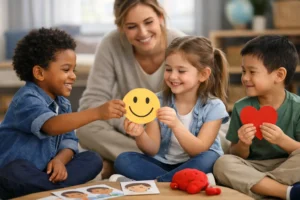
Invite children to choose a feeling word, point to a simple face chart, or share a color that matches how they feel. They might say they are happy, worried, excited, tired, or angry. The adult can respond warmly: “You’re feeling nervous about the new game. I’m glad you told me.”
This routine tells children that every feeling is welcome, even when every behavior is not. For younger children, keep the choices limited and concrete. Older children can add a reason or identify what might help them move through the feeling.
2. Read Stories With a Pause for Perspective
A picture book becomes an empathy lesson when adults pause before turning the page. Ask, “How do you think this character feels?” or “What could they do next?” There is no need to search for one correct answer. The conversation matters more than getting it right.
Pointing out clues helps children connect emotions to behavior: “Her shoulders are low, and she is sitting alone. She may feel left out.” This is especially helpful for children who are still learning to notice feelings in themselves and others.
3. Use a Calm-Down Space, Not a Punishment Spot
Create a comfortable, predictable place with a soft seat, a few books, paper and crayons, and sensory tools such as a stuffed animal or a pinwheel for slow breathing. Explain that this is a place to reset, not a place where children are sent away for being bad.
Practice using the space when everyone is calm. A child can learn to squeeze a pillow, take five slow breaths, or look at a favorite book before rejoining the group. Some children need quiet, while others regulate through movement or a caring conversation. The best approach depends on the child and the moment.
4. Practice Taking Turns Through Cooperative Play
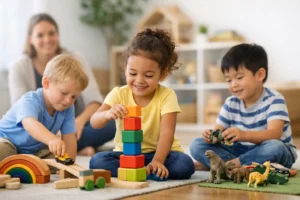
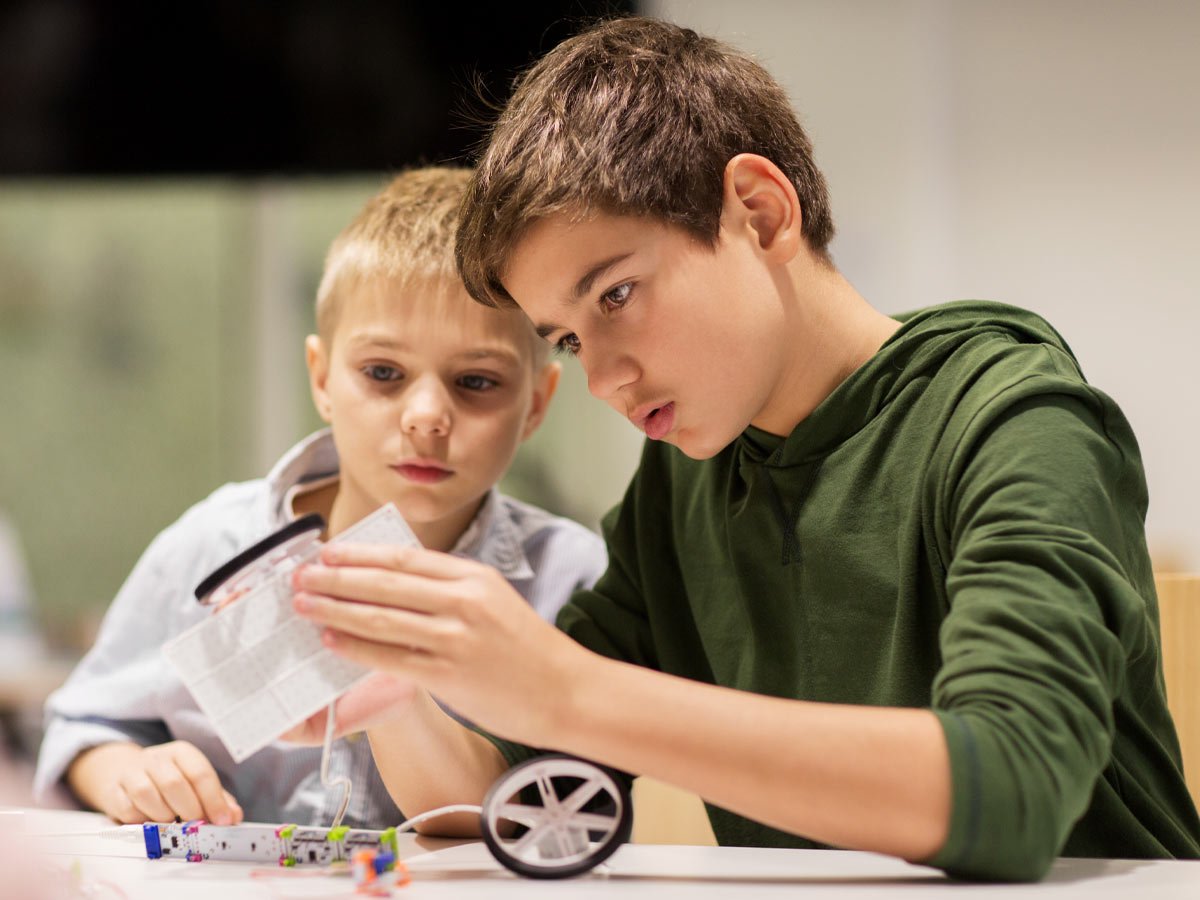
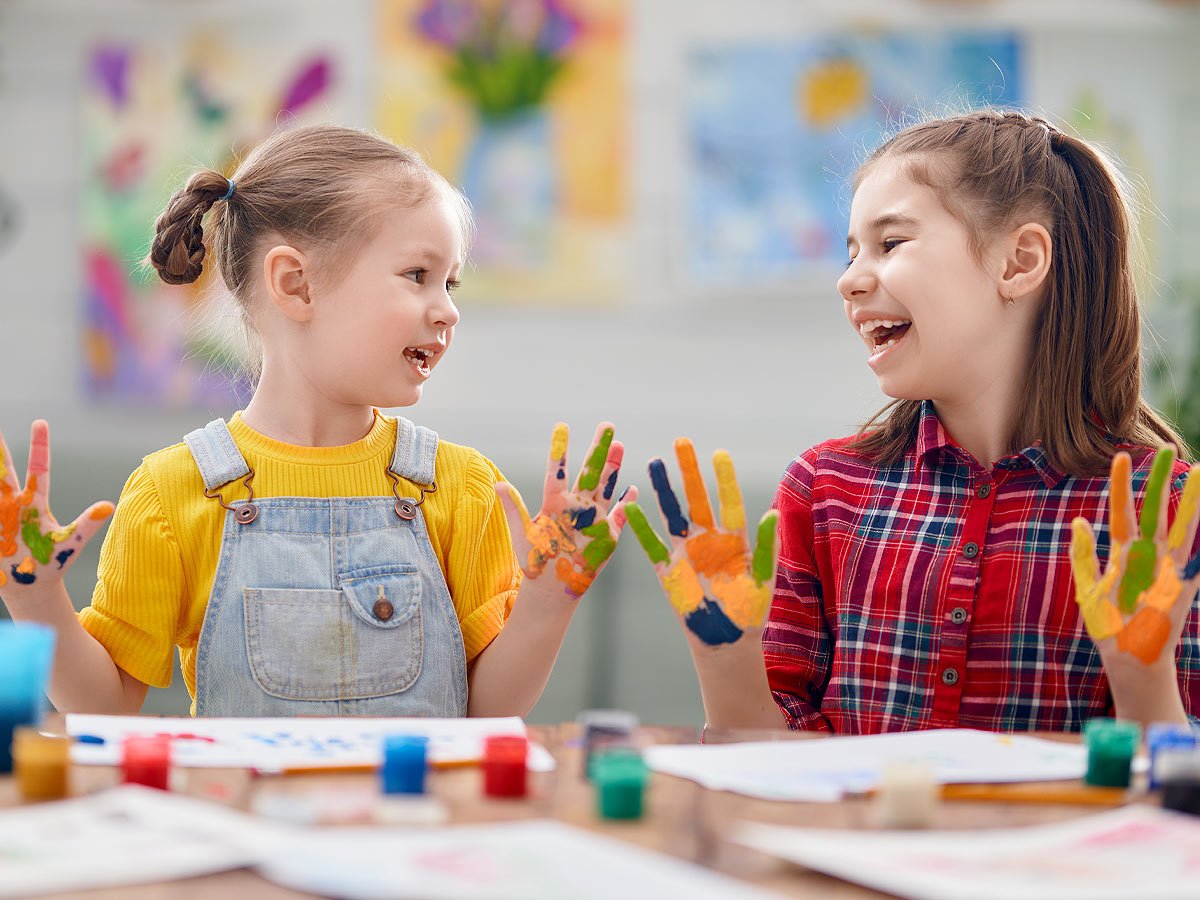
Board games, block building, dramatic play, and partner art projects all create natural opportunities to wait, share materials, and handle unexpected outcomes. Instead of stepping in immediately, adults can narrate what is happening: “You both want the blue marker. What are two ways we could solve that?”
At first, children may need clear choices: use a timer, find another blue shade, or decide who uses it first. Over time, they begin to offer solutions on their own. Cooperation is learned through many small moments, not one reminder to share.
5. Make a Kindness Chain
When children notice or perform an act of kindness, write or draw it on a paper strip. Link the strips into a chain that can grow across a week or month. A kind act can be as simple as holding a door, inviting someone to play, helping clean up, or noticing that a friend needs a tissue.
The purpose is not to create a competition or reward every helpful choice. It is to help children see that a caring community is built through everyday actions. Children also begin to understand that kindness can be offered in many ways.
6. Act Out Everyday Problems With Puppets
Puppets make difficult situations feel safer to explore. Use two simple puppets to act out familiar conflicts: someone grabs a toy, two friends want the same role in a game, or a child is not included. Then pause and ask children what the puppets could say or do.
Give children useful phrases to practice aloud, such as “Can I have a turn when you’re done?” “I don’t like that,” “Can we play together?” and “I need help.” Rehearsing these words during play makes them easier to access when emotions are running high.
7. Try a Compliment Circle
Have children sit together and offer a specific, genuine compliment to a classmate or family member. Model the difference between “You’re nice” and “I liked how you helped me find my backpack.” Specific observations teach children to recognize effort, generosity, persistence, and other strengths.
Some children may feel shy about speaking in a group. They can draw a kind note, whisper their compliment to an adult, or pass a small object that represents appreciation. The aim is connection, not putting children on the spot.
8. Build a Feelings Toolbox
Together, identify strategies that help when feelings become too big. A toolbox might include breathing slowly, getting a drink of water, asking for a hug, drawing, taking a movement break, or talking to a trusted grown-up. Let children help illustrate the choices so the tools feel familiar and personal.
It is helpful to remind children that different feelings need different responses. A child who is sad may want comfort, while a child who is angry may need space and a safe way to release energy. Adults can model this language, too: “I’m feeling overwhelmed, so I’m going to pause and take a breath.”
9. Work Together on a Shared Creation
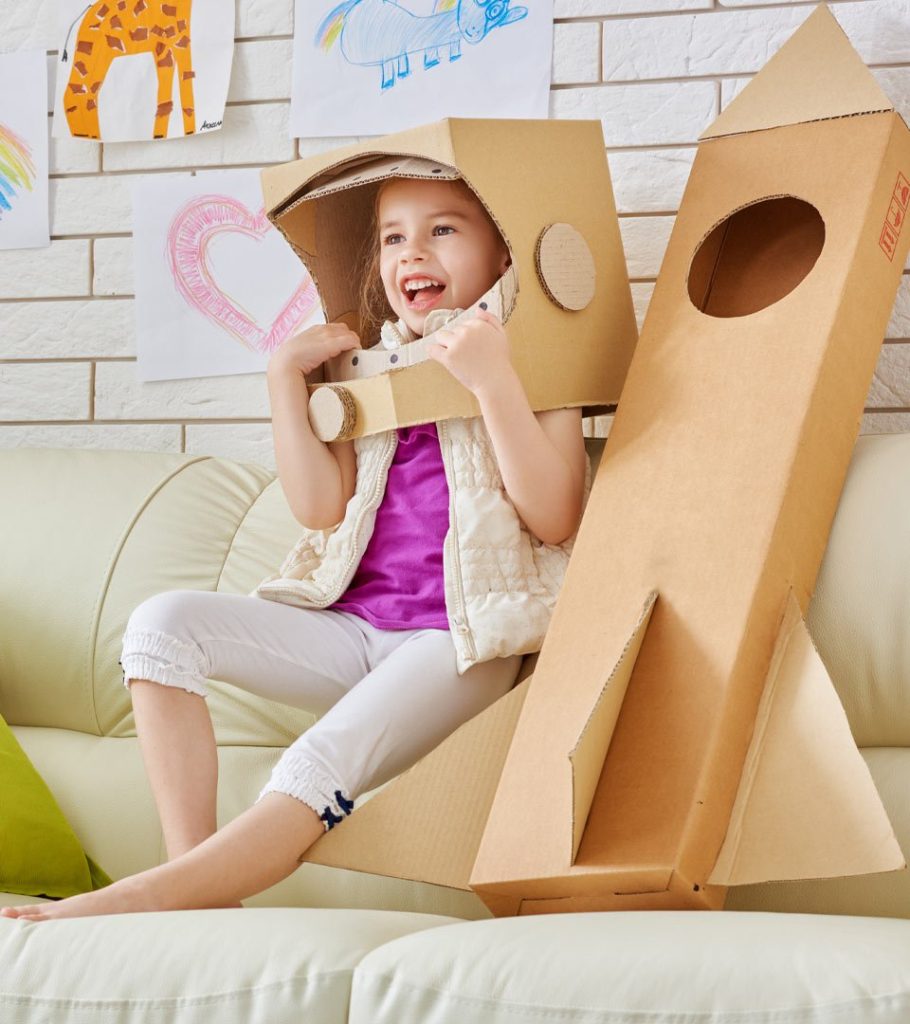
A class mural, garden bed, cardboard city, or blanket fort asks children to contribute to something larger than their own individual work. Before beginning, talk about the plan: What materials do we need? Who will do what? What can we do if our ideas are different?
Shared projects can be messy, and that is part of their value. Children learn that collaboration includes compromise, listening, and trying again. Adults should offer enough support to keep the project moving while leaving room for children to make real choices.
10. Close the Day With Gratitude and Reflection
At the end of the day, invite each child to share one good moment, one challenge, or one person they appreciated. A child can speak, draw, or simply listen until they are ready to participate. This quiet routine encourages children to notice their experiences and understand that hard moments can exist alongside joyful ones.
Reflection is also a gentle way to strengthen communication between school and home. When families ask a specific question such as, “What made you feel proud today?” children receive the message that their inner life matters.
How Adults Help These Activities Take Root
An activity is most effective when it is followed by responsive adult guidance. Rather than labeling a child as difficult, try naming the need beneath the behavior: “You were upset when the game changed. You wanted to know what would happen next.” This does not excuse hurtful behavior, but it gives children a path toward understanding and repair.
Consistency matters more than elaborate materials. A daily check-in, a practiced calming routine, and adults who use respectful language can create a powerful foundation. At The Winchester School, this kind of individualized support helps children feel known as they build confidence in both learning and relationships.
Children will still argue, feel jealous, resist transitions, and have days when their coping skills disappear. That is normal. Meet those moments with clear boundaries, a steady voice, and another chance to practice. Each small repair teaches a child something lasting: feelings can be managed, relationships can be restored, and they are safe to keep growing.