
A child walks into school for the first time carrying more than a backpack. They bring their temperament, their curiosity, their worries, their language, and the habits they have started to build at home. Those first school experiences matter deeply, which is why families often ask how early childhood education is important and what kind of difference it really makes over time.
The short answer is that early childhood education helps shape how children learn, relate to others, and see themselves. The longer answer is more meaningful. In the preschool and early elementary years, children are developing the skills that support everything that comes next – attention, communication, problem-solving, self-regulation, early literacy, and confidence. A strong early learning environment does not rush childhood. It gives children the right support at the right time.
How early childhood education is important for the whole child
When people hear the phrase early education, they sometimes think only about letters, numbers, and getting ready for kindergarten. Those foundational skills do matter, but quality early childhood education reaches further than academics alone.
Young children learn through relationships, routine, repetition, and exploration. In a well-designed classroom, they practice listening, taking turns, asking for help, expressing feelings, and sticking with a task even when it feels hard. These may seem like small moments, but they are the building blocks of independence and resilience.
This is one reason parents often notice changes that go beyond schoolwork. A child who once struggled to separate at drop-off may begin walking in with confidence. A child who had trouble joining group activities may start participating more comfortably. A child who was hesitant to speak up may begin sharing ideas proudly. These are not side benefits. They are central to healthy development.
The academic value starts earlier than many people think
Children do not suddenly become ready to learn when they enter elementary school. Learning starts long before that, and the early years are a prime window for developing core academic habits.
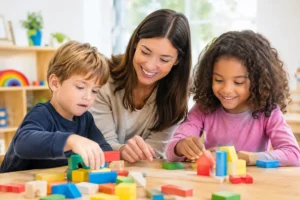
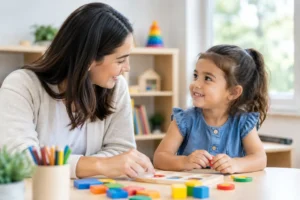
In a thoughtful early childhood program, pre-reading and pre-math skills are introduced in ways that match a child’s developmental stage. That might look like hearing sounds in words, retelling a story, sorting objects by attribute, recognizing patterns, counting with meaning, or comparing sizes and quantities. Hands-on learning is especially effective at this age because young children understand concepts best when they can see, touch, move, and experience them.
Just as important, children begin to connect effort with progress. They learn that trying again matters. They learn how to follow directions, complete short tasks, and work as part of a group. These habits support later academic success as much as knowing the alphabet or writing numbers.
There is also a practical truth many families appreciate. Children who enter kindergarten or first grade with strong early learning experiences often adjust more smoothly to classroom expectations. That does not mean every child develops at the same pace, because they do not. It means they are more likely to have had guided practice with the kinds of routines and skills school requires.
Social-emotional growth is not extra – it is essential
Parents are often balancing two hopes at once. They want their child to be challenged academically, and they want their child to feel safe, known, and happy at school. These goals belong together.
Social-emotional learning in early childhood helps children identify feelings, manage frustration, build friendships, and develop empathy. It also supports learning in direct ways. A child who can regulate emotions, recover from disappointment, and ask for help is better able to participate in the classroom.
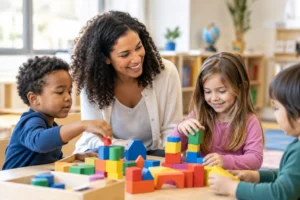
This matters because young children are still learning how to be part of a community outside the home. They are figuring out how to wait, how to share attention, how to solve small conflicts, and how to understand another person’s point of view. Those experiences can be awkward at times. They can also be incredibly productive when caring teachers guide children through them with patience and consistency.
For many families, this is where the quality of a school becomes especially visible. A nurturing environment is not simply pleasant. It creates the trust children need in order to take risks, make mistakes, and grow.
Why the classroom environment makes such a difference
Not all early childhood settings offer the same experience, and that distinction matters. A quality program is not defined by busy schedules or colorful walls alone. It is shaped by experienced teachers, intentional routines, strong communication, and an understanding of child development.
Small class sizes can make a meaningful difference because young children need attention that is both warm and responsive. Teachers who know their students well can notice subtle changes, adjust support, and celebrate progress that might otherwise be missed. They can challenge a child who is ready for more while reassuring one who needs extra time.
Consistency also matters. Children thrive when expectations are clear and relationships are steady. Familiar routines help them feel secure. Trusted teachers help them feel brave. When school becomes a predictable, encouraging place, children are more available for learning.
Families often feel this difference too. Open communication between school and home helps parents understand what their child is working on, where they are flourishing, and where they may need support. When parents and teachers work as partners, children benefit from a more connected experience.
How early childhood education is important in the long term
The benefits of early childhood education are not limited to one school year. A strong foundation can influence how children approach learning for years to come.
Children who have positive early school experiences often develop stronger self-belief as learners. They are more likely to see school as a place where they belong and where they are capable. That mindset matters. Academic growth is rarely just about information. It is also about confidence, persistence, and the willingness to engage.
There are, of course, no guarantees. A wonderful preschool experience does not remove every future challenge, and a child who starts more slowly is not destined to struggle. Development is not linear. Children change, and families’ needs change too. But early education can provide a durable base – one that supports smoother transitions, stronger learning habits, and healthier relationships with school.
This is especially valuable during the years when children are forming their earliest ideas about themselves. Do they feel competent? Do they feel heard? Do they trust adults outside their family? Do they believe they can learn something new even when it is hard? Those beliefs begin taking shape earlier than many people realize.
What parents should look for in an early childhood program
For families choosing a school, the question is not simply whether early childhood education matters. It is what kind of early childhood education best supports their child.
A strong program should balance structure with warmth. Children need purposeful learning, but they also need room to play, explore, create, and move. They need teachers who understand academic readiness and child development. They need classrooms where expectations are clear and compassion is constant.
It is also worth looking closely at how a school approaches individual children. Some thrive with immediate social engagement. Others need a gentler transition. Some are eager for early academic challenges. Others need more time to build confidence before showing what they know. A good early childhood program recognizes these differences and responds thoughtfully rather than expecting every child to fit the same mold.
This is one reason many families seek out schools with a strong sense of community and teacher continuity. Experience matters. So does trust. At The Winchester School, families often value the combination of personalized attention, developmentally appropriate academics, and the kind of caring relationships that help young children feel both supported and capable.
A foundation that reaches beyond the classroom
Early childhood education matters because it helps children build a relationship with learning at the moment that relationship is first forming. It gives them language for their ideas, structure for their day, guidance for their emotions, and opportunities to grow in confidence one experience at a time.
For parents, choosing an early school setting can feel like a big decision because it is one. The right environment does more than fill a child’s day. It helps shape how they will step into the wider world – curious, prepared, and secure in the knowledge that they can learn, connect, and keep growing.