
A child who proudly zips a coat alone, asks a thoughtful question during story time, or comforts a classmate after a hard moment is doing far more than getting through the day. Those small moments show how early childhood development unfolds in real life – steadily, meaningfully, and across many areas at once.
For parents of young children, that can be both reassuring and a little overwhelming. Growth does not happen in neat categories. Language, self-control, motor skills, confidence, curiosity, and early academics all influence one another. That is why the early years deserve thoughtful attention. They are not simply a warm-up for “real school.” They are the foundation.
What early childhood development really includes
When people hear the term, they sometimes think only of milestones like counting to ten or learning letter sounds. Those skills matter, but early childhood development is broader than academics alone. It includes cognitive growth, physical coordination, social-emotional development, communication, problem-solving, and a child’s growing sense of independence.
In practice, these areas are deeply connected. A child who feels safe and supported is more willing to take academic risks. A child with stronger language skills can better express feelings and ask for help. A child who builds fine motor strength through play is also preparing to write, draw, cut, and manage classroom tasks with more ease.
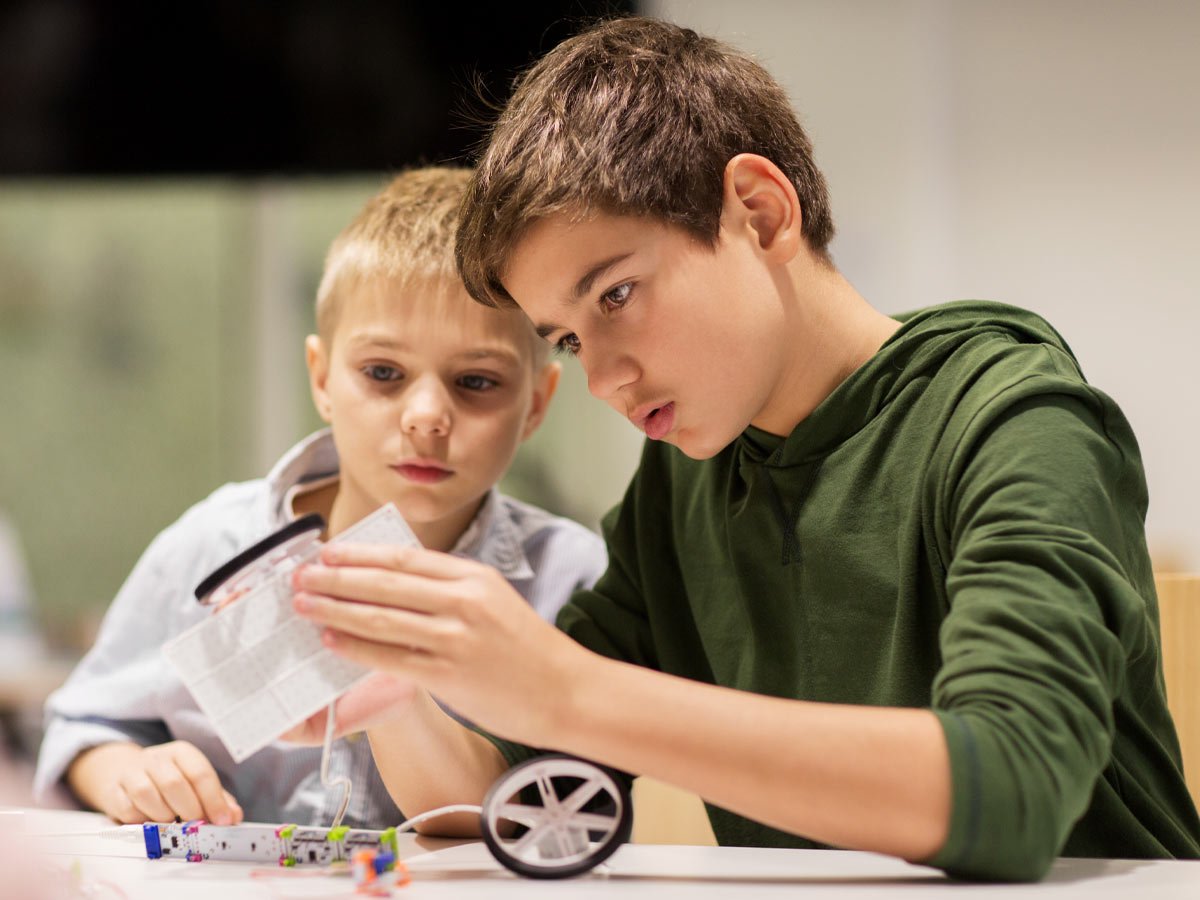
This is one reason high-quality early education feels so intentional. It may look playful on the surface, and it should. But beneath that play is important work. Children are learning how to listen, persist, cooperate, notice patterns, solve problems, and trust their own abilities.
How early childhood development affects school readiness
School readiness is often misunderstood. It is not about expecting young children to perform like older students. It is about helping them enter a learning environment with the tools they need to participate, connect, and grow.
A child who is ready for school can usually follow simple routines, engage with peers, communicate needs, and begin working through frustration with support. Early literacy and numeracy matter, of course, but they are only part of the picture. Attention span, emotional regulation, and confidence often have just as much impact on a child’s early school experience.
That is why one-size-fits-all expectations can miss the mark. Some children arrive talkative and socially comfortable but need more support with focus. Others know letters and numbers well but need time to build confidence in a group setting. Healthy development is not identical from child to child, and strong schools understand that.
Why relationships matter so much in the early years
Young children learn best in the context of trusted relationships. Before they can fully focus on academic skills, they need to feel known, secure, and understood. This is not separate from learning. It is part of learning.
A warm, consistent teacher helps a child feel safe enough to try something new. A predictable classroom routine reduces anxiety and frees up energy for exploration. Open communication between school and home creates continuity, which is especially helpful during the early years when children are still making sense of expectations in different settings.
This is where smaller class sizes and experienced teachers can make a real difference. Children benefit when adults notice subtle changes, respond with care, and adjust support to meet individual needs. A child who is hesitant, highly active, sensitive, or still learning to separate from home does not need labeling. That child needs patient guidance and a steady environment.
How early childhood development grows through play
Play is sometimes treated as a bonus in education, when in fact it is one of the most effective ways young children learn. Through purposeful play, children practice language, test ideas, negotiate roles, strengthen muscles, and build resilience.
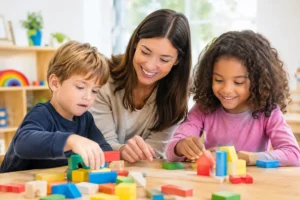
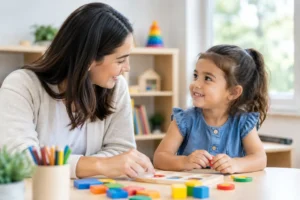
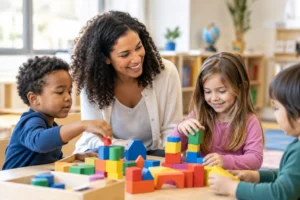
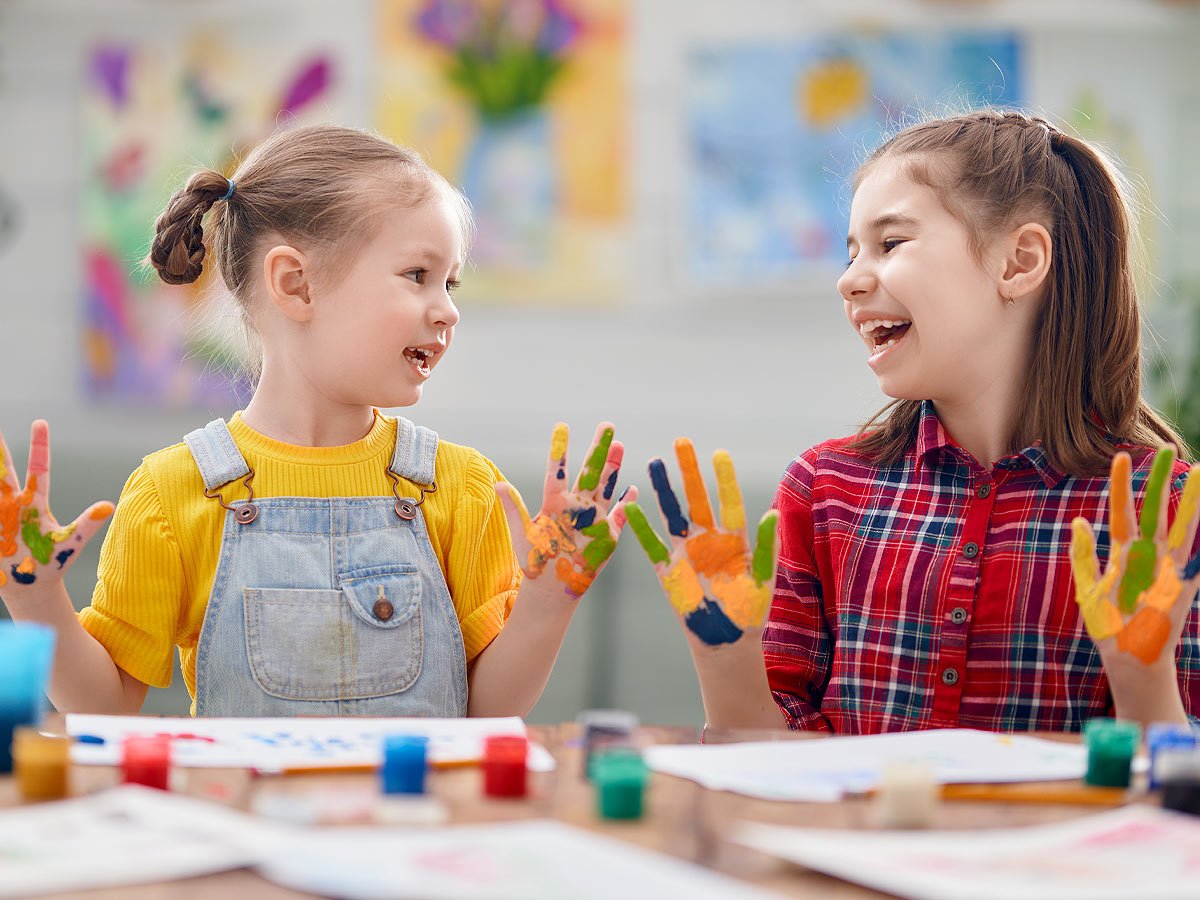
Block building supports spatial reasoning and early math thinking. Pretend play encourages storytelling, perspective-taking, and self-regulation. Art develops creativity and fine motor control. Outdoor play builds coordination, confidence, and sensory awareness. Even simple classroom routines, like cleaning up materials or choosing an activity, help children practice responsibility and decision-making.
That said, balance matters. Play alone is not the full answer, just as worksheets alone are not the full answer. Children thrive when hands-on exploration is paired with thoughtful instruction, clear expectations, and responsive teaching. The best early childhood programs do not force a choice between nurturing care and academic preparation. They understand that both belong together.
How early childhood development supports emotional growth
One of the biggest shifts in early childhood is learning how to manage feelings in a group setting. This takes time. Young children are still developing the ability to wait, share, recover from disappointment, and express frustration appropriately.
These skills are often called social-emotional skills, but for families, they show up in everyday ways. Can a child separate from a parent without intense distress? Join a group activity? Use words instead of physical reactions? Accept help? Try again after a mistake?
None of this develops overnight. It grows through repetition, modeling, and encouragement. A caring classroom gives children opportunities to practice these skills with support nearby. That support is especially valuable because emotional growth can affect everything else. A child who feels overwhelmed may struggle to engage with reading, math, or peer relationships. A child who feels capable and connected is more likely to participate fully.
A closer look at “it depends”
Parents often want clear answers about what children should be doing by a certain age. Milestones can be useful, but development is rarely perfectly linear. One child may speak early and struggle with transitions. Another may be physically confident but slower to warm up socially. Variation is normal.
What matters is not whether every child reaches every skill at the exact same moment. What matters is steady growth, a responsive environment, and adults who pay attention when extra support may be needed. There is a difference between a child developing at an individual pace and a child showing signs that deserve closer observation.
This is another benefit of experienced early educators. They can often distinguish between a temporary phase and a pattern that may call for additional help. They also know how to work with families in a reassuring, practical way rather than creating unnecessary alarm.
How families can support early childhood development at home
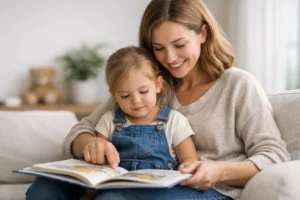
Parents do not need to recreate school at the kitchen table. In fact, some of the most valuable support happens through ordinary routines. Reading together, talking during car rides, involving children in simple household tasks, and giving them time to play independently all contribute to development.
Children benefit when adults speak with them, not just to them. A trip to the grocery store becomes a chance to compare sizes, name colors, count apples, and discuss what comes next. Bedtime routines build language, connection, and predictability. Mealtime conversations support listening and turn-taking. Even putting on shoes or washing hands independently helps build competence.
The goal is not perfection. It is consistency. Children make the most progress when home and school both communicate the same message: you are capable, you are supported, and learning is part of daily life.
How early childhood development shapes the years ahead
The early years do not determine everything, but they matter deeply. They shape how children approach learning, relate to others, and see themselves. A child who experiences encouragement, structure, and individualized support early on often carries that sense of confidence into later grades.
That does not mean every challenge disappears. Development continues, and children change. But a strong early foundation can make future transitions smoother. It helps children build the habits and inner security that allow them to meet new expectations with greater resilience.
In a community-centered school setting, that foundation is strengthened even more. Children benefit from being known well. Families benefit from trusted communication. And learning becomes something joyful rather than something to fear. At The Winchester School, that belief has guided generations of young learners and their families.
If you are considering the best next step for your child, it helps to look beyond surface-level milestones. Ask where your child will be seen, supported, challenged, and encouraged to grow as a whole person. Early childhood is a brief season, but the care taken during these years can echo for a very long time.