
A child’s first school experience can shape how they feel about learning long before they can explain it. Early childhood education is where many children first discover that questions are welcome, mistakes can lead to new ideas, and adults outside their family can be trusted guides. For parents, choosing this setting is not simply about filling the day. It is about finding a place where a child is known, encouraged, and thoughtfully prepared for what comes next.
The strongest early learning environments balance warmth with purpose. Children need room to move, imagine, build, talk, and try again. They also benefit from consistent routines, meaningful academic experiences, and teachers who understand how much growth is happening beneath the surface. When those pieces come together, children begin school with more than early literacy or number knowledge. They develop confidence in their own ability to learn.
Early Childhood Education Starts With Relationships
Young children learn through relationships. Before a child can fully focus on a new activity, participate in a group lesson, or recover from a difficult moment, they need to feel safe. A familiar greeting at the door, a teacher who notices a quiet change in mood, and classmates who practice kindness together all help create that sense of security.
This does not mean school should be free of challenge. Children grow when they are invited to do something just beyond what feels easy, whether that means sharing an idea during circle time, writing the first letter of their name, or joining a new game. The difference is that a caring teacher offers support without taking over. Over time, children learn, “I can try this, and I have help when I need it.”
Small class sizes can make this kind of individualized attention more possible. Teachers have more opportunities to observe each child’s interests, celebrate progress, and respond early when a child needs extra reassurance or a different approach. For a child who enters school cautiously, one steady relationship can make the classroom feel like a place of belonging. For an outgoing child, that same relationship can help channel enthusiasm into cooperation and focus.
Learning Through Play Has Real Purpose
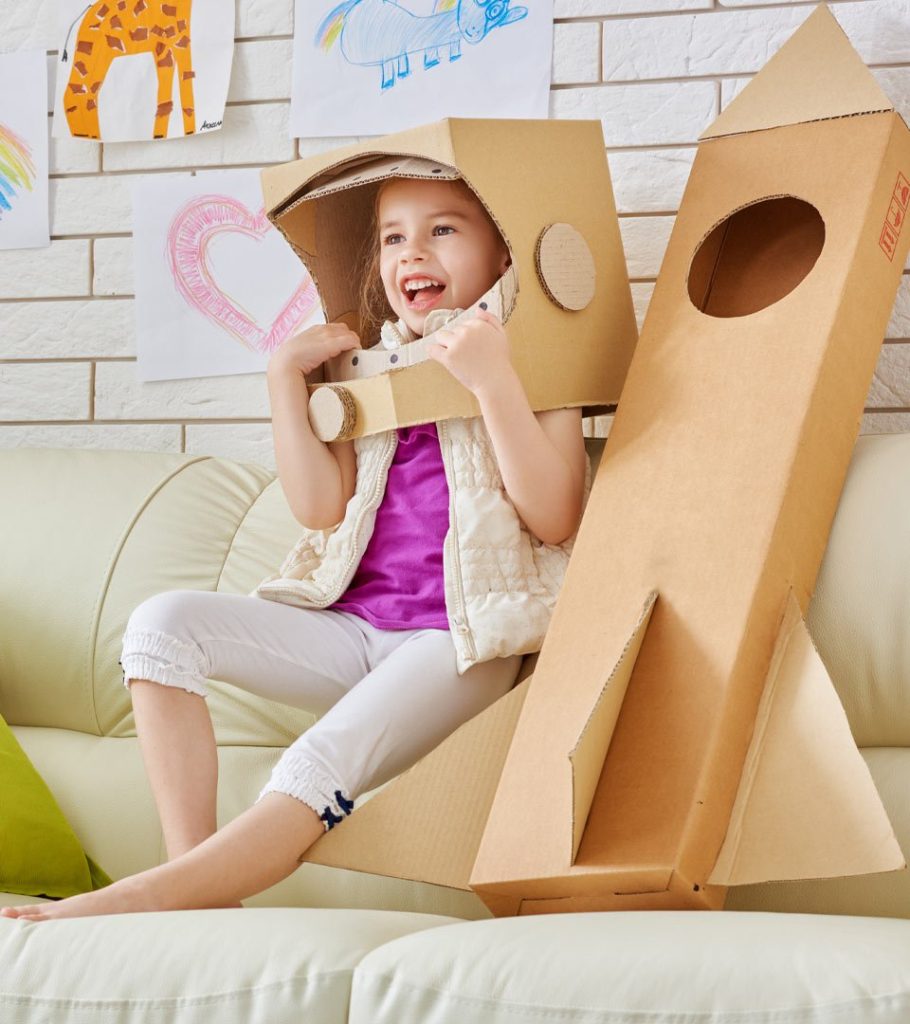
Parents sometimes hear the word “play” and wonder whether enough learning is taking place. Purposeful play is not time away from learning. For young children, it is often the way learning becomes understandable and memorable.
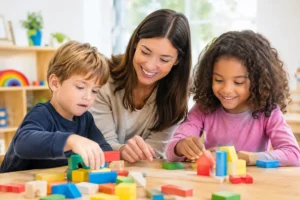
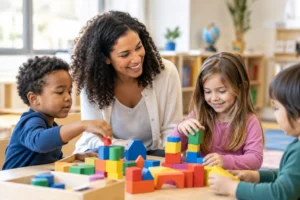
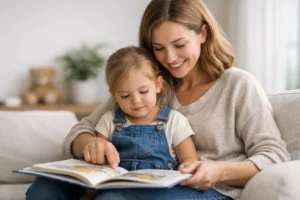
When children create a grocery store in dramatic play, they negotiate roles, use new vocabulary, sort items, and count pretend money. When they build a tower, they explore balance, measurement, persistence, and problem-solving. A story read aloud can lead to questions about characters’ feelings, new words, letter sounds, or a painting inspired by the setting. These experiences give academics a meaningful context.
A developmentally appropriate classroom also includes direct instruction. Children benefit from hearing sounds in words, recognizing letters, exploring books, counting objects, comparing quantities, and practicing early writing. The goal is not to rush children through material designed for older students. It is to introduce foundational skills in ways that invite curiosity and match how children learn best.
The balance matters. A program focused only on worksheets may ask children to sit still before they are ready to do so for long periods. A program with little structure may miss chances to build the habits that support later learning. Thoughtful early education makes room for both guided practice and hands-on discovery.
Academic Foundations Grow in Everyday Moments
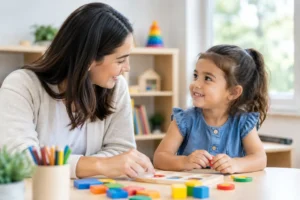
Early academic growth often looks simpler than it is. A child matching the letters in their name is beginning to understand that print carries meaning. A child counting crackers at snack time is connecting numbers to real quantities. A child retelling a favorite story is practicing comprehension, memory, language, and confidence.
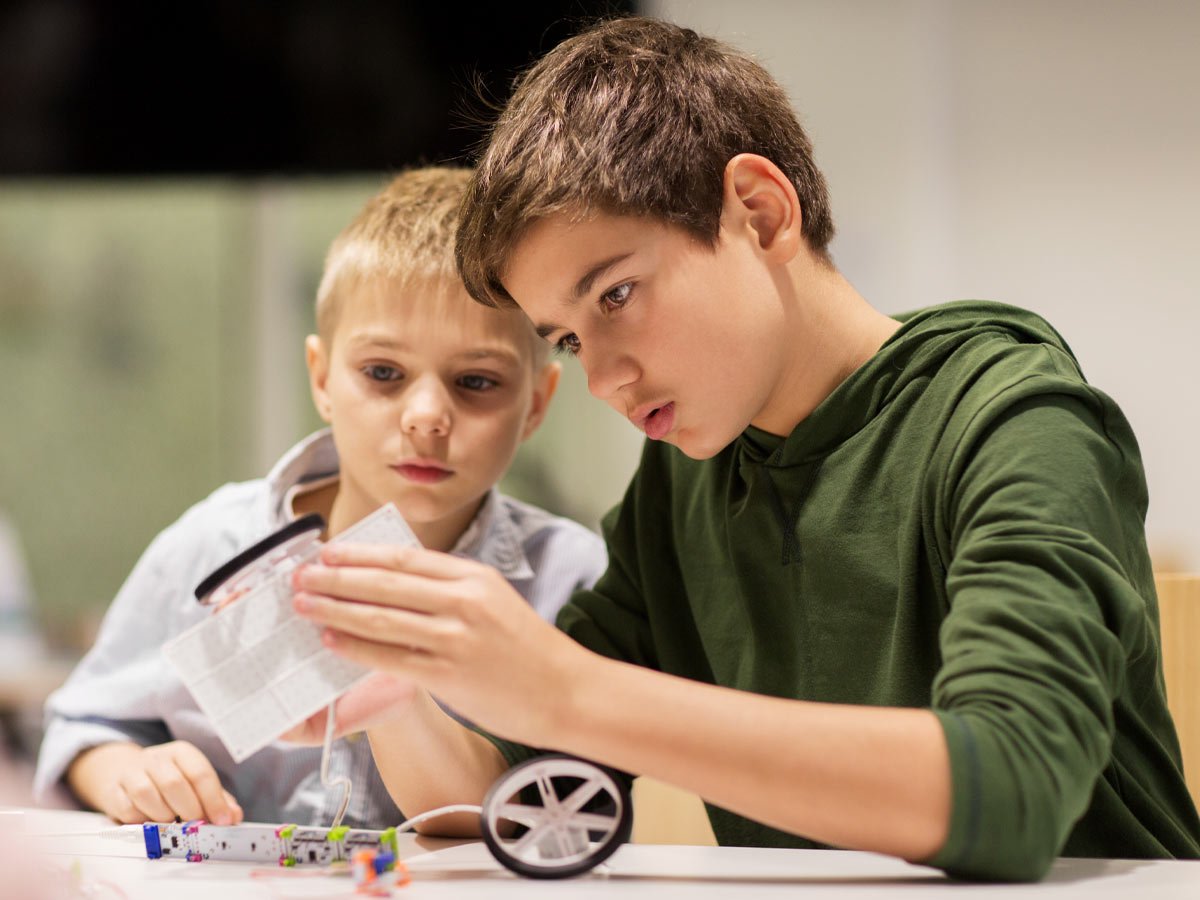
Teachers strengthen these moments by asking open-ended questions. “What do you notice?” can lead a child to describe a pattern. “What might happen next?” encourages prediction. “How could we solve that problem together?” helps children move from frustration toward flexible thinking. These conversations support learning without turning every moment into a test.
Social-Emotional Skills Belong in the Curriculum
Children do not leave feelings at the classroom door. They arrive with excitement, hesitation, disappointment, pride, and sometimes big emotions they do not yet know how to manage. Learning to recognize those feelings and respond to them appropriately is a central part of a strong school experience.
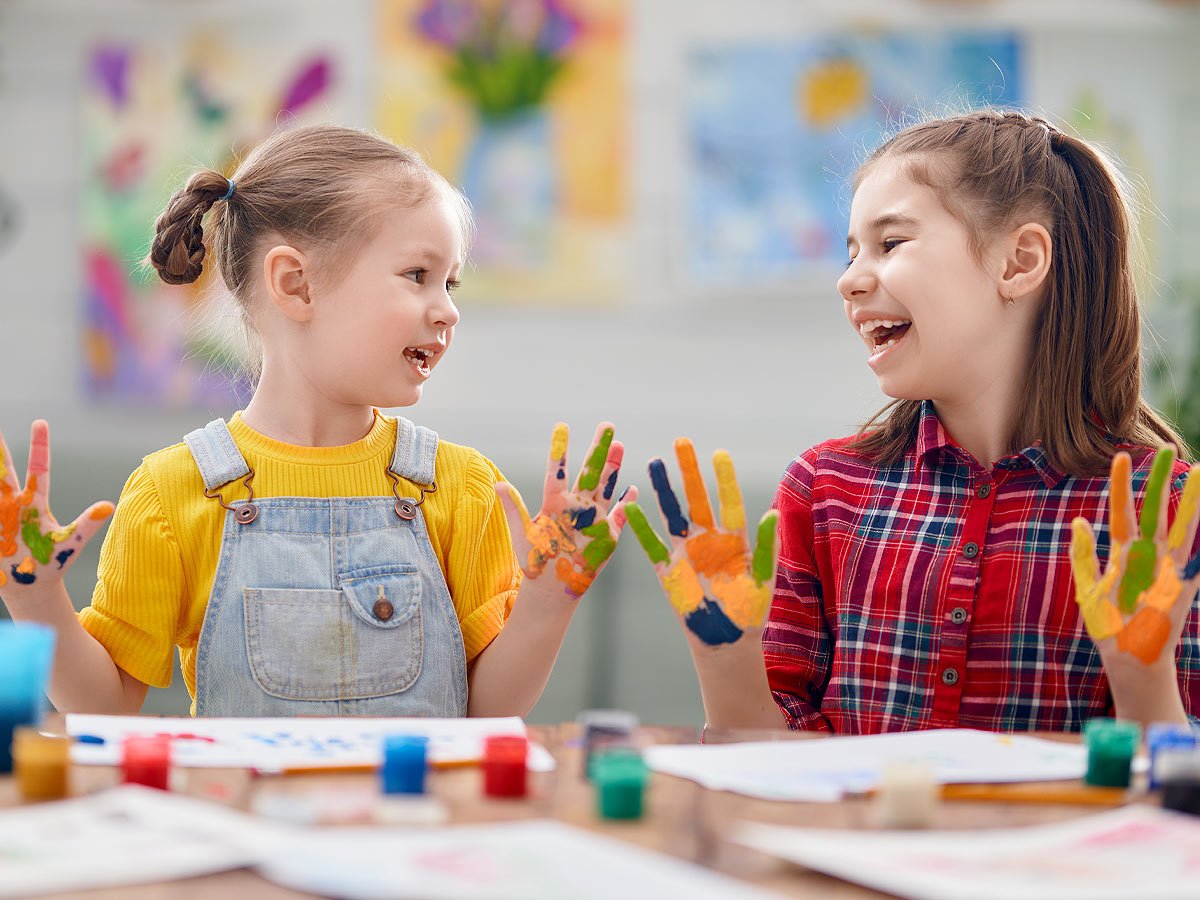
In early childhood, social-emotional learning happens in very practical ways. Children practice waiting for a turn, asking to join a game, listening when someone else is speaking, and using words instead of grabbing. They learn that a disagreement can be worked through. They begin to see how their choices affect other people.
These skills support academics as well. A child who can cope with disappointment is more likely to try a difficult puzzle again. A child who can listen to a classmate can participate more fully in a group project. A child who feels comfortable asking for help can move forward instead of quietly giving up.
Families play an essential role here. When home and school use similar language around feelings, routines, and problem-solving, children receive a clearer message. Open communication gives parents insight into classroom progress and gives teachers valuable context about a child’s needs, interests, and changes at home. Partnership is not an extra feature of early learning. It helps children feel that the important adults in their lives are working together.
Routines Help Children Feel Ready
A predictable school day gives young children a framework they can rely on. They learn what happens after arrival, where materials belong, when it is time to clean up, and how to transition from an active game to a quieter activity. These routines may appear ordinary, but they build independence and reduce unnecessary stress.
Children also need variety within that structure. A healthy day may include conversation, movement, outdoor play, small-group learning, creative work, books, music, and time for exploration. Movement is especially valuable. Young children are not designed to learn while sitting still for hours. Physical activity supports coordination, self-regulation, and attention, while outdoor time offers fresh space for curiosity and collaboration.
The transition from preschool to kindergarten, and from kindergarten into early elementary grades, becomes easier when children have practiced following routines, caring for materials, participating in a group, and persisting with a task. Readiness is not a checklist of facts to memorize. It is a growing ability to approach new experiences with confidence.
What Parents Can Look for in a School
A school visit can reveal a great deal. Look beyond classroom decorations and ask how teachers get to know each child, how they communicate with families, and how they respond when children need different kinds of support. Listen for evidence that the program values both progress and process.
It is helpful to ask about the balance of the day. How are literacy and math introduced? How much time do children have for active, hands-on learning? What does the school do when a child is struggling socially, academically, or with separation at drop-off? The best answer is rarely a single method for every child. It should reflect experience, attentiveness, and a willingness to partner with families.
Teacher continuity also deserves consideration. Experienced educators bring knowledge of child development, but long-tenured teachers often bring something equally meaningful: a deep understanding of the school community. They recognize that children develop at different paces, know how to guide families through transitions, and help create the steady traditions that make a school feel welcoming year after year.
At The Winchester School, this combination of personal attention, foundational learning, and community connection helps children from Pre-K through early elementary years grow as capable, joyful learners. The aim is not to make childhood move faster. It is to give children a strong, caring place from which to take their next steps.
The right early school experience gives children a quiet but lasting message: you are safe here, your ideas matter, and learning is something you can do. That message can travel with them well beyond their first classroom.