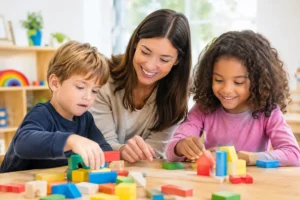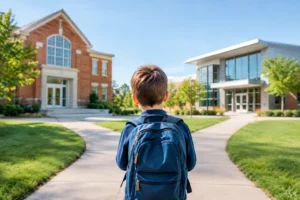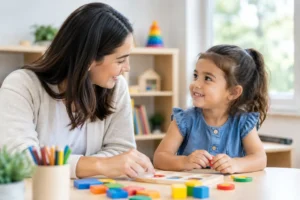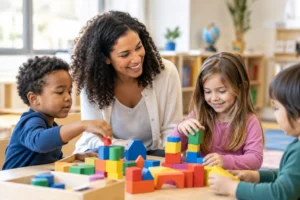

A child who confidently hangs up a backpack, joins a friend at the block area, and tells a teacher, “I need help,” is doing meaningful learning before the first worksheet begins. As families consider early childhood development 2026, many are looking beyond milestones alone. They want to know what will help their children feel secure, curious, capable, and ready to grow.
For children ages 3 through 8, development does not happen in separate categories. Language grows during dramatic play. Early math takes shape while setting the table for snack. Emotional regulation is practiced when a child waits for a turn, recovers from disappointment, or tries a new task after getting it wrong the first time. A strong early education honors those connections while giving children the structure and encouragement they need to thrive.
What Early Childhood Development 2026 Means for Families
The conversation around early education is becoming more thoughtful. Parents have good reason to care about reading readiness, number sense, and a smooth transition to elementary school. At the same time, families are recognizing that academic progress is strongest when children feel known, safe, and included.
That balance matters because young children learn through relationships. A child is more likely to take a risk with a new word, a challenging puzzle, or an unfamiliar classroom role when a trusted teacher is nearby to notice the effort. Small moments of encouragement build confidence over time, and confidence becomes part of a child’s readiness to learn.
In 2026, families may also be weighing how much technology belongs in young children’s lives. Digital tools can support communication, creativity, and access when used thoughtfully. They cannot replace conversation with a caring adult, hands-on discovery, outdoor movement, or the give-and-take of play with peers. For preschool and early elementary students, the most lasting learning still has a human center.
The Skills That Matter Before and Beyond Academics
A developmentally appropriate program does not lower expectations. It teaches meaningful skills in ways children can understand and enjoy. Rather than asking every child to learn at the same pace or in the same way, teachers observe closely, offer the right level of challenge, and celebrate steady growth.
Language begins with connection
Before children become fluent readers and writers, they need rich language experiences. They need to hear stories, ask questions, describe what they notice, sing songs, and share ideas with classmates. A child who talks about the caterpillar she found outside is building vocabulary. A child who retells a favorite story is learning sequence, memory, and expression.
Early literacy should include clear instruction in letters, sounds, print awareness, and writing. It should also protect the joy of books. When reading becomes only a checklist of skills, children can miss the wonder of discovering a new character or seeing their own thoughts appear on paper. The goal is not simply to produce early readers. It is to help children see themselves as readers, storytellers, and communicators.
Math grows through real experiences
Young children build mathematical thinking when they sort buttons by color, compare two towers, count the days on a calendar, and figure out how many cups are needed for snack. These experiences give numbers meaning.
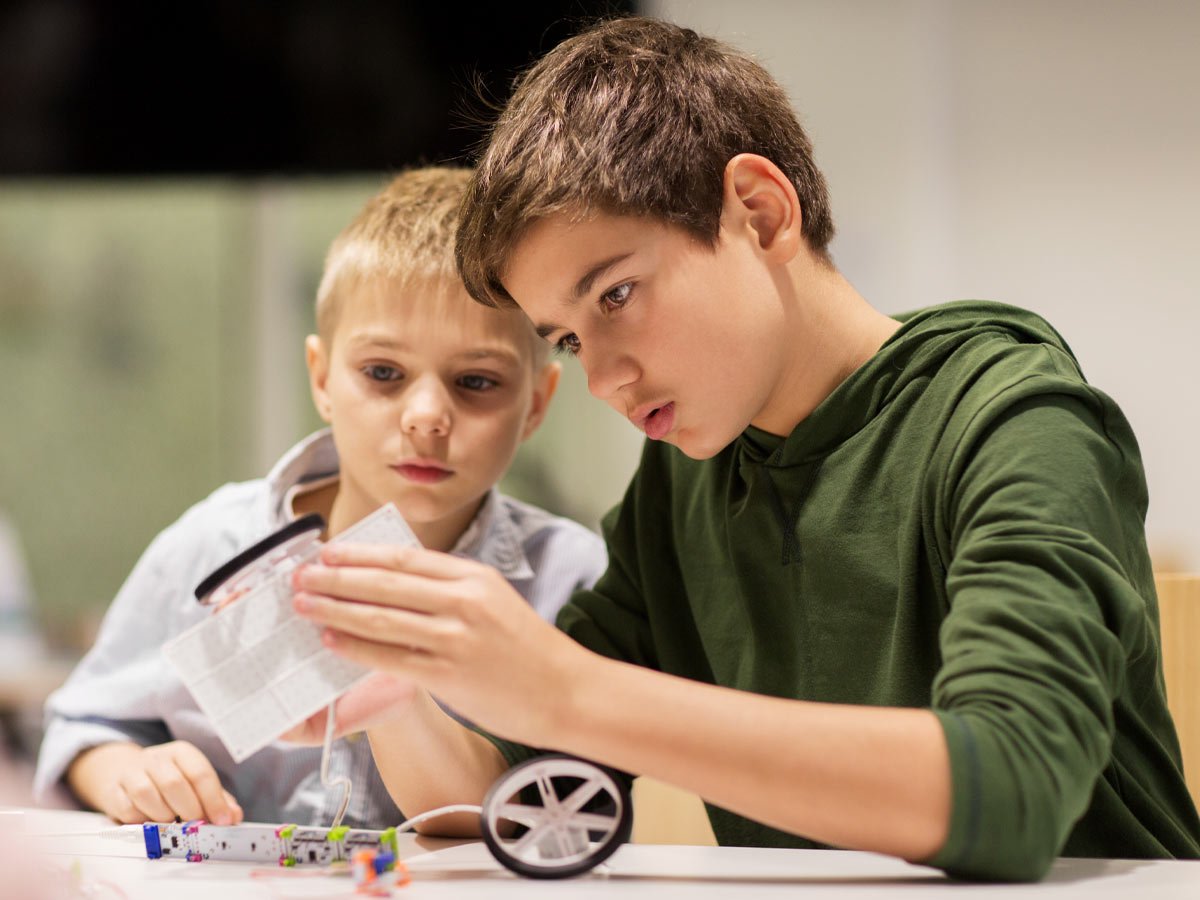
As children move into Kindergarten through second grade, they benefit from explicit instruction in number relationships, operations, patterns, measurement, and problem-solving. Hands-on materials remain valuable because they allow children to see and touch ideas that can otherwise feel abstract. The right approach combines practice with curiosity: How did you solve that? Can you show another way? What do you notice?
Social-emotional growth is daily learning
Children do not arrive at school already knowing how to manage frustration, enter a group, or express a disagreement respectfully. These are learned skills, and they deserve patient instruction.
A nurturing classroom gives children words for their feelings and practical ways to respond. They learn that it is okay to be disappointed, nervous, excited, or angry. They also learn what to do next: take a breath, ask for space, use respectful words, seek a teacher’s help, or try again. This work supports friendships, classroom participation, and academic persistence.
There is a trade-off to consider. Children need opportunities to solve small social problems themselves, but they also need adults who are attentive and ready to guide them. Support should not mean stepping in too quickly, nor should independence mean leaving a child to struggle alone. Experienced teachers know when to offer a prompt, when to listen, and when to provide a reassuring hand.
Why Play Still Has a Serious Purpose
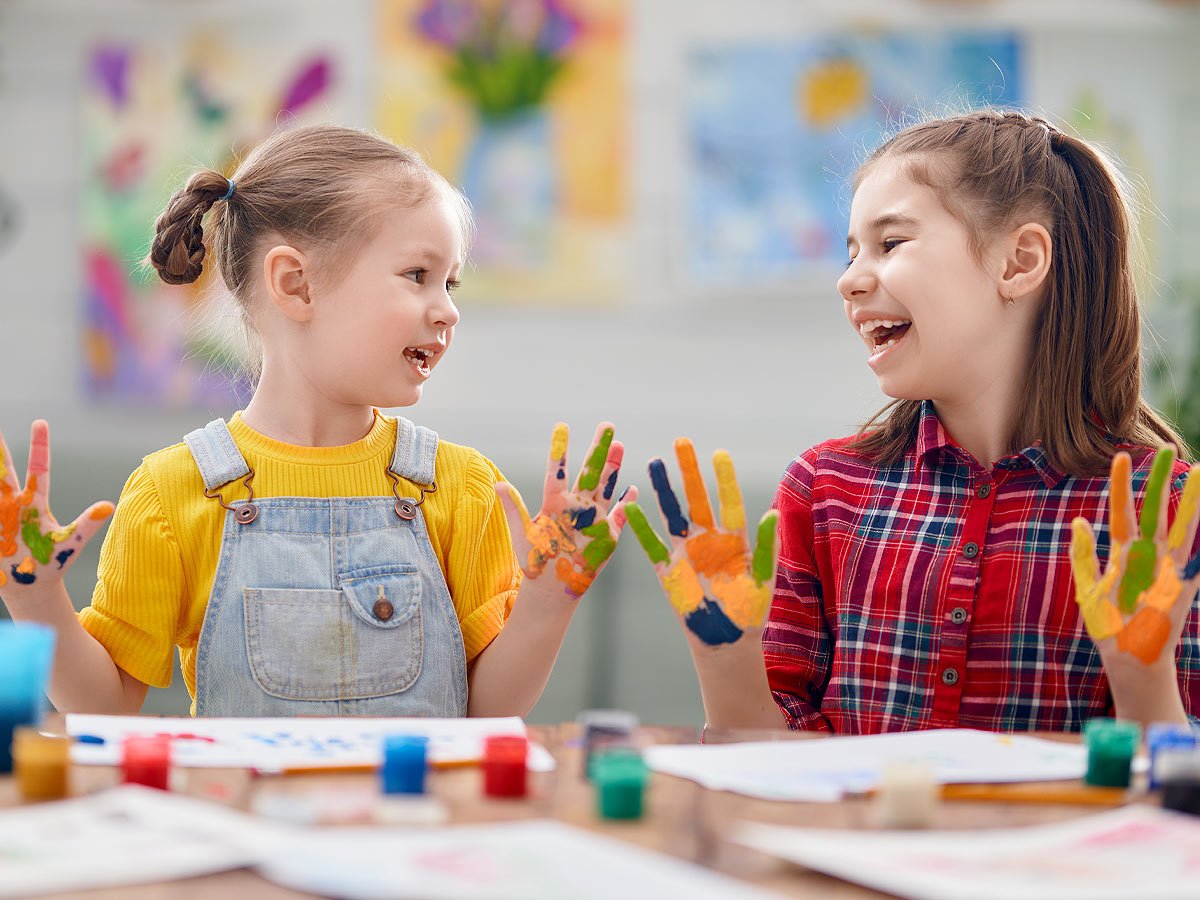
Play is sometimes mistaken for a break from learning. For young children, it is often where learning becomes deepest. In a pretend restaurant, children negotiate roles, write menus, count play money, and use language to solve problems. At a sensory table, they make predictions and observe changes. On the playground, they strengthen coordination, confidence, and cooperation.
Purposeful play is not unstructured chaos. It is supported by thoughtful classroom environments, clear routines, and teachers who extend children’s ideas. A teacher might add clipboards to the block area, introduce a new word during a science activity, or help children reflect after a disagreement. The child remains an active participant, while the adult brings intention and care.
This is particularly valuable for children with different learning styles, temperaments, or developmental timelines. One child may eagerly speak in a group but need support with fine-motor tasks. Another may quietly concentrate for long periods but take time to join peers. Individualized attention helps teachers recognize strengths without overlooking areas where a child needs practice.
The Value of Consistency and Family Partnership
Young children do best when home and school work together. Families do not need to recreate the classroom at home. Simple, consistent interactions make a difference: reading together, talking about the day, inviting children to help with everyday routines, and giving them time to answer questions in their own words.
Open communication also helps adults respond early when a child is having a difficult transition, struggling with a particular skill, or showing a new interest. Parents know their children deeply. Teachers see them in a community of peers. When those perspectives are shared with respect, children receive more complete support.
Consistency is especially meaningful during the early school years. Familiar routines, caring relationships, and clear expectations help children direct their energy toward learning rather than uncertainty. At The Winchester School, long-tenured teachers and small classes create opportunities for children to be recognized as individuals, not simply as names on a roster.
What to Look for in an Early Learning Environment
When visiting a preschool or early elementary classroom, parents can learn a great deal by looking past the decorations. Notice whether children are engaged and comfortable approaching their teachers. Listen for respectful conversation, not just quiet compliance. Look for work that reflects real effort and age-appropriate challenge.
Ask how teachers support a child who is ready for more in one area and needs extra time in another. Ask how families receive updates and how the school handles friendship concerns, transitions, and big feelings. The answers should feel specific, not rehearsed.
A strong program will also make room for art, music, movement, science, and outdoor play alongside foundational academics. These are not extras that can be set aside when children are busy. They help children make connections, express themselves, and discover what brings them joy.
The best next step for a young child is rarely about finding the flashiest program or pushing skills too far too soon. It is about finding a place where your child can be warmly welcomed, thoughtfully challenged, and encouraged to grow at a pace that builds both knowledge and confidence.