
The morning your child walks into a new classroom, they do not need to arrive knowing every letter, number, or classroom rule. What helps most is the feeling that they belong there, can try something unfamiliar, and have caring adults nearby when a task feels hard. That is the heart of how to build school readiness: supporting the skills, habits, and confidence that help young children participate fully in learning.
For families, readiness can feel like a high-stakes checklist. It is more helpful to think of it as a gradual process. Children develop at different rates, and a child who is still learning to hold a pencil comfortably may be wonderfully ready to listen, ask questions, make friends, and persist through a challenge. Those strengths matter every day in a Pre-K, Kindergarten, or early elementary classroom.
What School Readiness Really Means
School readiness is not a test a child passes before the first day of school. It is a blend of developmental areas that grow together: communication, early thinking skills, physical coordination, social-emotional growth, and independence with daily routines.
A ready child can usually separate from a trusted caregiver with support, follow a simple direction, communicate basic needs, and participate in a group for short periods. They are beginning to wait for a turn, recover after disappointment, and use words when they need help. They are also curious. Curiosity is often the engine behind early academic growth.
Academic foundations have a place, too. Children benefit from recognizing their name, hearing rhymes and beginning sounds, counting small groups of objects, noticing patterns, and exploring books. Still, memorizing flash cards is not the same as understanding. A child who can recite numbers to 20 but has not yet connected numbers to quantities needs meaningful practice, not pressure.
Readiness also depends on the child and the setting. A quieter child may need extra time to warm up in a new group, while an energetic child may need practice slowing down and listening. Neither temperament is a problem to fix. With patient guidance and a classroom that knows each child well, both children can thrive.
How to Build School Readiness at Home
The most lasting preparation often happens in ordinary moments. It does not require turning home into a classroom. Instead, give your child repeated opportunities to practice the small responsibilities and conversations that make school feel more familiar.
Create predictable routines
Children feel more secure when they know what comes next. A simple morning rhythm – getting dressed, eating breakfast, brushing teeth, and gathering belongings – gives children a sense of capability. Invite them to do one part independently, even if it takes longer than doing it for them.
The same is true at bedtime. Putting pajamas in the hamper, choosing clothes for tomorrow, and helping pack a backpack build responsibility in manageable steps. If a child struggles, offer calm support rather than stepping in immediately. Saying, “You are working hard on that zipper. Let’s try one more time together,” teaches persistence without creating frustration.
Practice transitions, too. Give a brief warning before leaving the playground or cleaning up toys. Then follow through kindly. Classroom days include many transitions, and children who have experienced predictable limits at home often find them easier to manage at school.
Make conversation part of the day
Language grows through real exchanges. Talk about what you see while walking, shopping, cooking, or riding in the car. Ask open-ended questions such as, “What do you think will happen if we add water?” or, “How did that make you feel?” Give your child time to answer, even if their response comes slowly.
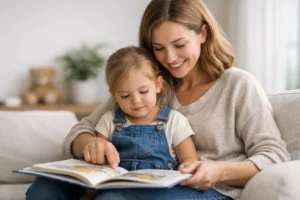
Reading together remains one of the simplest and most powerful readiness practices. Pause to look at pictures, predict what may happen next, notice a repeated word, or connect the story to your child’s life. Let your child turn pages and retell parts of a familiar book. The goal is not to finish as many books as possible. It is to help books become a source of comfort, wonder, and conversation.
Songs, nursery rhymes, and playful word games also strengthen listening skills. Clapping the syllables in family names or finding words that rhyme with “cat” makes early literacy feel enjoyable rather than like a lesson.
Protect time for purposeful play
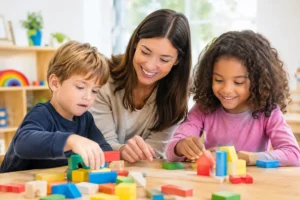
Play is serious learning for young children. When children build with blocks, they explore balance, shape, planning, and problem-solving. When they play restaurant, doctor, or family, they practice language, cooperation, and empathy. When they draw, cut, mold clay, or string large beads, they develop the hand strength and coordination needed for writing.
Try not to rush in with an answer when a tower falls or a puzzle piece does not fit. A gentle prompt such as, “What else could you try?” helps your child build flexible thinking. This can be harder than it sounds, especially when everyone is trying to get out the door. Even a few unhurried minutes of child-led play each day are valuable.
Screens may occasionally be part of family life, but they cannot replace the back-and-forth interaction children receive through conversation, movement, and imaginative play. If screen time is used, shared viewing and talking about what is on the screen is generally more meaningful than passive watching alone.
Help Your Child Practice Being Part of a Group
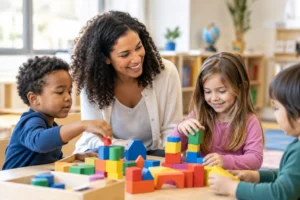
A classroom is a community. Children learn there not only by working independently, but also by sharing materials, listening to others, joining activities, and repairing small conflicts. These skills take practice long before a child is expected to use them in a busy classroom.
Arrange low-pressure chances for your child to be with other children, whether through playdates, library story times, family gatherings, or a structured early learning program. Stay nearby when needed, but allow space for your child to try entering play, asking for a turn, or responding when someone says no.
When conflicts happen, name the feeling and guide the next step. “You wanted the truck, and you are disappointed. Maya is using it now. What can you say when you are ready for a turn?” This approach does not expect children to manage big feelings alone. It shows them that feelings are welcome and that there are constructive ways to act on them.
It also helps to normalize mistakes. Children who believe they must get everything right may avoid new tasks. Praise the effort you notice: trying a new material, returning to a difficult puzzle, or speaking up to ask a question. Confidence grows when children learn that mistakes are part of learning, not evidence that they cannot do something.
Build Early Academic Skills Through Daily Life
Young children learn best when early academic ideas are connected to something real. Count apples as you place them in a bag. Sort laundry by color. Notice the shapes of signs, windows, and crackers. Compare which cup holds more water at bath time. These experiences give numbers and patterns meaning.
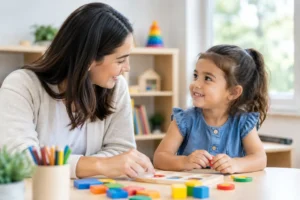
For writing readiness, offer crayons, washable markers, chalk, and paper without focusing only on perfect letter formation. Encourage your child to draw a picture and tell you about it. Write down their words if they ask. Seeing spoken ideas become print helps children understand that writing carries meaning.
Teaching children to write their name can be useful, particularly as they begin identifying personal belongings. Keep it light. Some children will enjoy tracing or copying letters; others may prefer making marks, drawing, or working with letters in sand. Fine motor control develops over time, and pushing too quickly can make a joyful activity feel discouraging.
Partner With Teachers and Trust the Process
Families know their children deeply, and teachers bring experience with child development, learning environments, and peer dynamics. The strongest school starts are built through that partnership. Share what helps your child feel comfortable, any routines that are working at home, and areas where you hope for support.
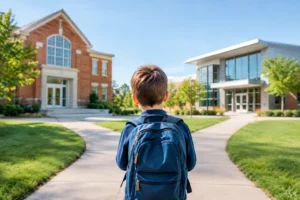
Before school begins, attend orientation events when possible, visit the building, and practice the route to school. Point out familiar details: the front door, the playground, or the classroom window. For some children, a short, confident goodbye routine helps. For others, a family photo in a backpack or a teacher’s welcoming ritual can make the transition easier.
At The Winchester School, small classes and close communication help teachers understand each child’s starting point and respond with care. Readiness is not a race, and children do not need to arrive fully formed. They need a place where their questions, growing independence, and unique ways of learning are valued.
As your child moves toward school, look for progress in the moments that are easy to miss: the first time they try again after a setback, tell a friend how they feel, carry their own lunchbox, or become absorbed in a story. Those everyday victories are not small. They are the beginning of a confident learner’s relationship with school.