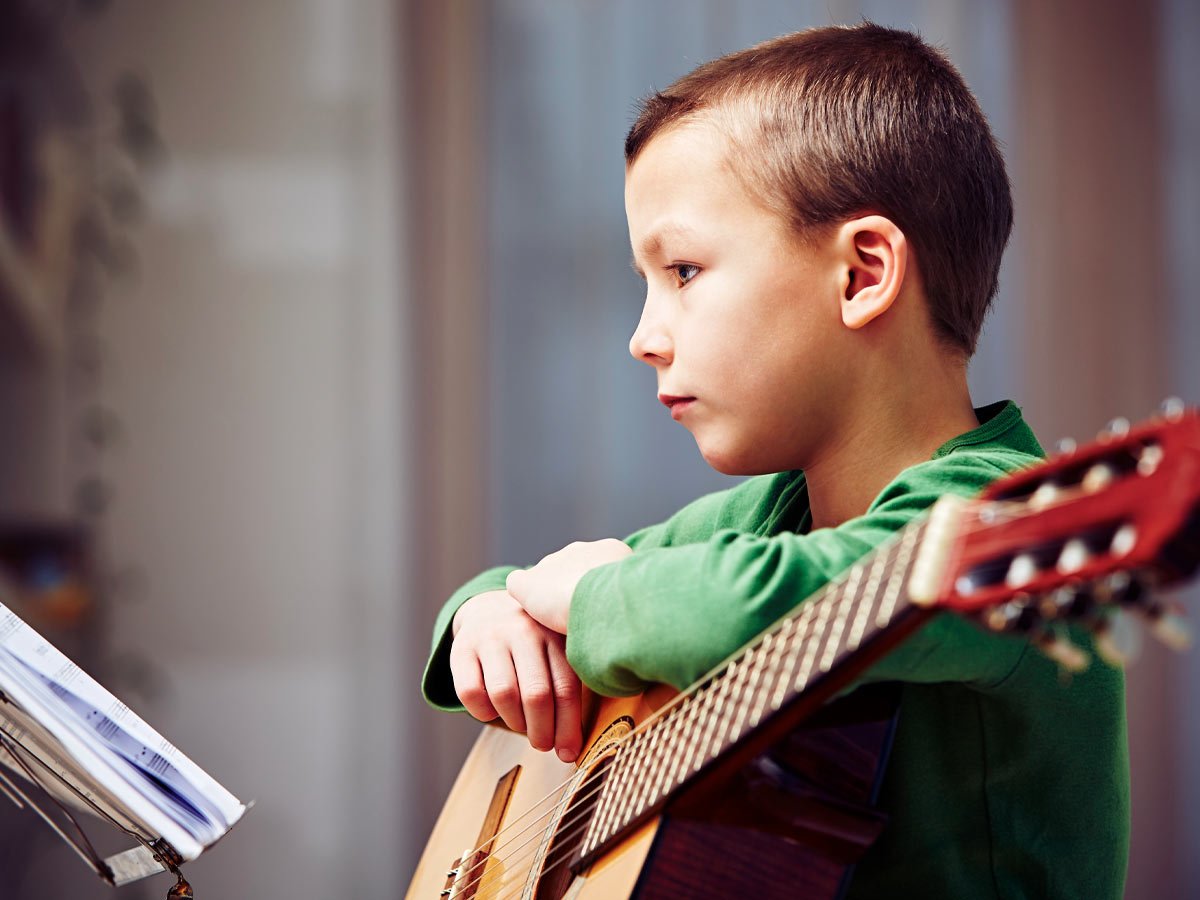

A child who is just learning to raise a hand, sound out a word, or join a group project needs more than a seat in a classroom. They need to be noticed. Small class learning outcomes are meaningful because they create more opportunities for teachers to understand each child’s strengths, questions, routines, and next steps – especially during the formative preschool and early elementary years.
For families choosing a school, class size is not simply a number on a brochure. It shapes how often a child speaks, how quickly a teacher can respond when something feels difficult, and whether learning feels personal. A smaller setting cannot remove every challenge, but it can give children the attention, encouragement, and consistency they need to meet challenges with growing confidence.
How Small Classes Support Early Learning
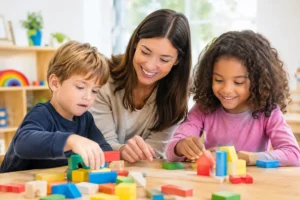
Young children learn through relationships as much as lessons. Before they can focus on a new math concept or persist with early writing, they need to feel safe enough to try. In a smaller class, teachers have more room to build that trust through everyday moments: greeting a child by name, noticing a change in mood, asking about an idea shared during morning meeting, or celebrating progress that might otherwise go unseen.
That familiarity helps teachers plan with greater purpose. Rather than relying only on whole-group instruction, they can observe how each child approaches a task. One student may be ready to extend a pattern independently. Another may understand the idea but need materials they can touch and move. A third may need reassurance before participating. These observations help teachers adjust instruction while keeping the classroom experience warm and steady.
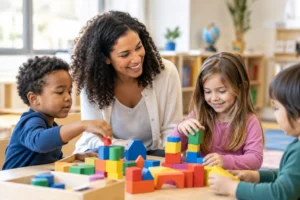
Small classes also allow children to be active participants rather than quiet observers. They have more chances to answer questions, tell stories, work with materials, and practice communicating with peers. For children ages 3 through 8, these experiences build the habits that support later academic success: listening, taking turns, asking for help, and staying engaged when learning becomes more complex.
Small Class Learning Outcomes Parents Can See
The benefits of a small class often appear in practical, everyday ways. Parents may notice that their child talks more specifically about school, feels known by their teacher, or begins using new words and skills at home. Growth is not always dramatic, and children develop at different rates, but individualized attention can make progress easier to recognize and support.
More responsive academic support
Early learning classrooms include a wide range of readiness levels. Even children of the same age may differ in language development, fine motor skills, number sense, attention, and comfort in a group. A teacher in a smaller class is better positioned to provide timely guidance instead of waiting until a child has become frustrated or disengaged.
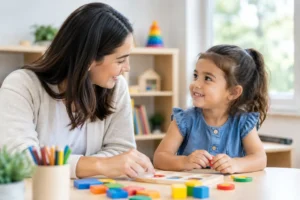
This might look like sitting with a student to practice pencil grip, offering a new reading challenge to a child who is ready, or revisiting a counting activity in a small group. The goal is not to rush children through milestones. It is to help them build a strong understanding at a pace that is appropriately challenging and encouraging.
Stronger communication and language skills
Language grows when children have real reasons to talk. In a smaller group, there is more space for conversations that go beyond one-word answers. Children can describe what they built, explain how they solved a problem, listen to a classmate’s perspective, and learn to express a need respectfully.
These exchanges support vocabulary, comprehension, and early literacy. They also help quieter children find their voice. Some children are naturally eager to share, while others need time and a familiar audience. A caring teacher can create gentle openings for both, without placing unnecessary pressure on a child who is still building confidence.
Greater social-emotional growth
Learning to navigate friendships is serious work for young children. They are practicing how to enter play, share materials, manage disappointment, and repair a misunderstanding. In a smaller classroom community, teachers can more readily guide these moments as they happen.
This does not mean children will never disagree. Healthy classrooms include conflict, strong feelings, and opportunities to practice problem-solving. The difference is that children can receive coaching before small challenges become overwhelming. Over time, they begin to recognize emotions, use words to communicate, and see themselves as capable members of a group.
Meaningful teacher-family partnership
Parents want to know more than whether their child had a good day. They want insight into how their child is learning, relating to others, and growing in independence. Smaller classes often support more informed communication because teachers have a fuller picture of each student’s daily experience.
When school and home share observations, children benefit from consistent support. A family can reinforce a new routine at home, share a strategy that helps with transitions, or celebrate a classroom accomplishment together. This partnership is especially valuable during the early years, when a child’s developmental changes can be both exciting and difficult to interpret.
Why Class Size Is Only One Part of the Picture
Small classes matter, but class size alone does not guarantee a thoughtful education. A small room without experienced, attentive teachers will not offer the same value as a well-led classroom where children are known and challenged. Families should consider how teachers use their time, how the curriculum balances structure with exploration, and how the school communicates with parents.
Teacher continuity can be particularly reassuring for young children. Educators who know their school community and understand early childhood development can create predictable routines while responding flexibly to individual needs. Children benefit when adults work together with shared expectations and a genuine commitment to their well-being.
It also helps to ask what learning looks like during a typical day. Are children invited to investigate, create, move, read, and collaborate? Is there time for focused skill-building as well as imaginative play? Academic foundations are essential, but young children learn best when those foundations are connected to hands-on discovery and positive relationships.
What a Small Classroom Feels Like for a Child
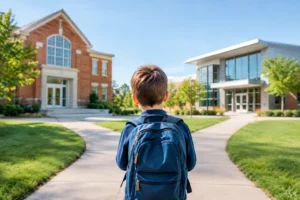
The strongest small class learning outcomes are not limited to testable skills. They include a child walking into school with growing comfort, knowing where to put their backpack, recognizing familiar faces, and trusting that an adult will help when something is hard. These quiet forms of confidence give children the security to take academic risks.
A well-supported child may be more willing to attempt an unfamiliar word, try a new art material, join a partner activity, or keep working after a mistake. Those are powerful signs of learning. They show that a child is developing resilience alongside knowledge.
At The Winchester School, small class settings are part of a broader commitment to preparing joyful learners for life. With experienced teachers, developmentally appropriate academics, creative enrichment, and close family communication, children can receive both the nurturing care and purposeful instruction their early years deserve.
When you visit a classroom, listen for more than the volume of the room. Notice whether children are being heard, whether teachers respond with patience and purpose, and whether each child seems to have a place in the community. Those daily experiences can become the foundation for a child who feels ready to learn, ready to belong, and ready for what comes next.