
A child proudly writing the first letter of her name, building a bridge tall enough for a toy truck, or working through a disagreement with a classmate is doing meaningful learning. A developmentally appropriate curriculum guide helps parents recognize why these moments matter and how a strong early education program turns them into lasting academic, social, and emotional growth.
For children ages 3 through 8, learning should feel active, purposeful, and within reach. That does not mean school lacks structure or expectations. It means teachers set thoughtful goals, then choose materials, lessons, routines, and support that match how young children grow. Children are invited to stretch their skills without being rushed past the essential work of childhood.
What Developmentally Appropriate Learning Means
Developmentally appropriate practice begins with a simple but powerful idea: children learn best when teaching reflects both what is generally expected at their age and who they are as individuals. A classroom of Kindergarten students may share broad learning goals, for example, but they will not all arrive with the same language skills, confidence, interests, attention span, or prior school experience.
A responsive teacher notices those differences. One child may be ready to write several connected sentences, while another is strengthening pencil control and confidence with letter sounds. Both can be engaged in meaningful literacy work. The goal is not to lower expectations for one child or push another through work that has lost its challenge. It is to provide the right next step.
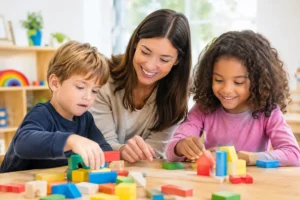
This approach also recognizes that development is connected. A child’s ability to listen during a lesson may be affected by sleep, worry, hunger, excitement, or uncertainty in a new setting. A child building with blocks is practicing more than creativity. They may be using early math, planning, communication, problem-solving, and persistence. Strong curriculum planning makes room for these connections rather than treating academic subjects and social-emotional growth as separate worlds.
A Developmentally Appropriate Curriculum Guide for Families
When parents hear the word curriculum, they may picture a list of subjects, worksheets, or standards. Those pieces can have a place, particularly as children move into early elementary grades. Yet a thoughtful curriculum is larger than a scope and sequence. It includes how children are welcomed each morning, how teachers introduce new ideas, how classroom materials invite exploration, and how adults help children recover from mistakes.
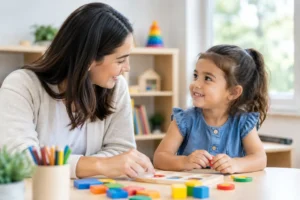
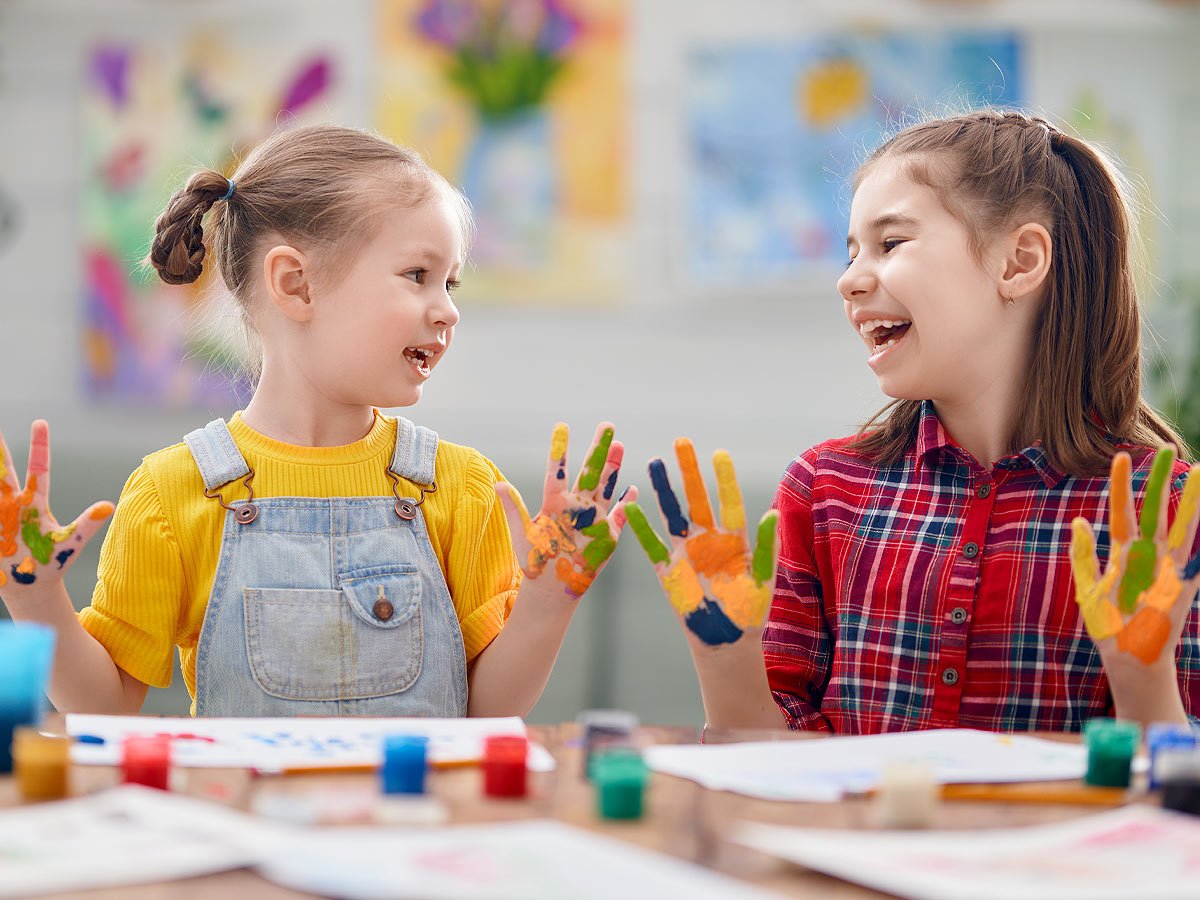
For Pre-K students, a developmentally appropriate day often includes imaginative play, songs, stories, movement, art, conversation, outdoor time, and hands-on investigations. Children may sort buttons by color and size, dictate a story for a teacher to write down, compare the length of ramps, or practice taking turns in a dramatic-play kitchen. These experiences build language, early literacy, number sense, fine-motor control, and cooperation in ways young children can understand.
In Kindergarten, learning becomes more intentional and academically organized while remaining active. Children may work with letter-sound relationships, read simple texts, compose stories, count and compare quantities, and explore patterns. They still need time to manipulate materials, talk through their thinking, and revisit concepts. A five-year-old who can recite a rule is not necessarily ready to apply it independently. Teachers look for understanding, not just repetition.
By first and second grade, students are ready for greater independence, sustained reading and writing, stronger number sense, and more complex problem-solving. Developmentally appropriate instruction does not mean avoiding challenge. It means giving children concrete models, guided practice, useful feedback, and enough time to build mastery. A child may solve a math problem with counters, draw a representation, explain the strategy aloud, and then write an equation. Each step supports deeper learning.
Play Is Serious Learning
One common parent question is whether play takes time away from academics. In high-quality early childhood education, play and academic learning work together. Purposeful play gives children a meaningful reason to use new skills.
A child running a pretend grocery store is counting, grouping, reading environmental print, negotiating roles, and using new vocabulary. Children designing a tower must consider balance, shapes, measurement, and what to do when their first plan falls apart. During a science investigation, children learn to observe closely, predict outcomes, and describe changes.
Play should not be mistaken for a lack of planning. Teachers create inviting environments, introduce materials with intention, ask questions that extend thinking, and observe where children need support. There is a difference between leaving children on their own and giving them the freedom to explore within a carefully designed learning experience.
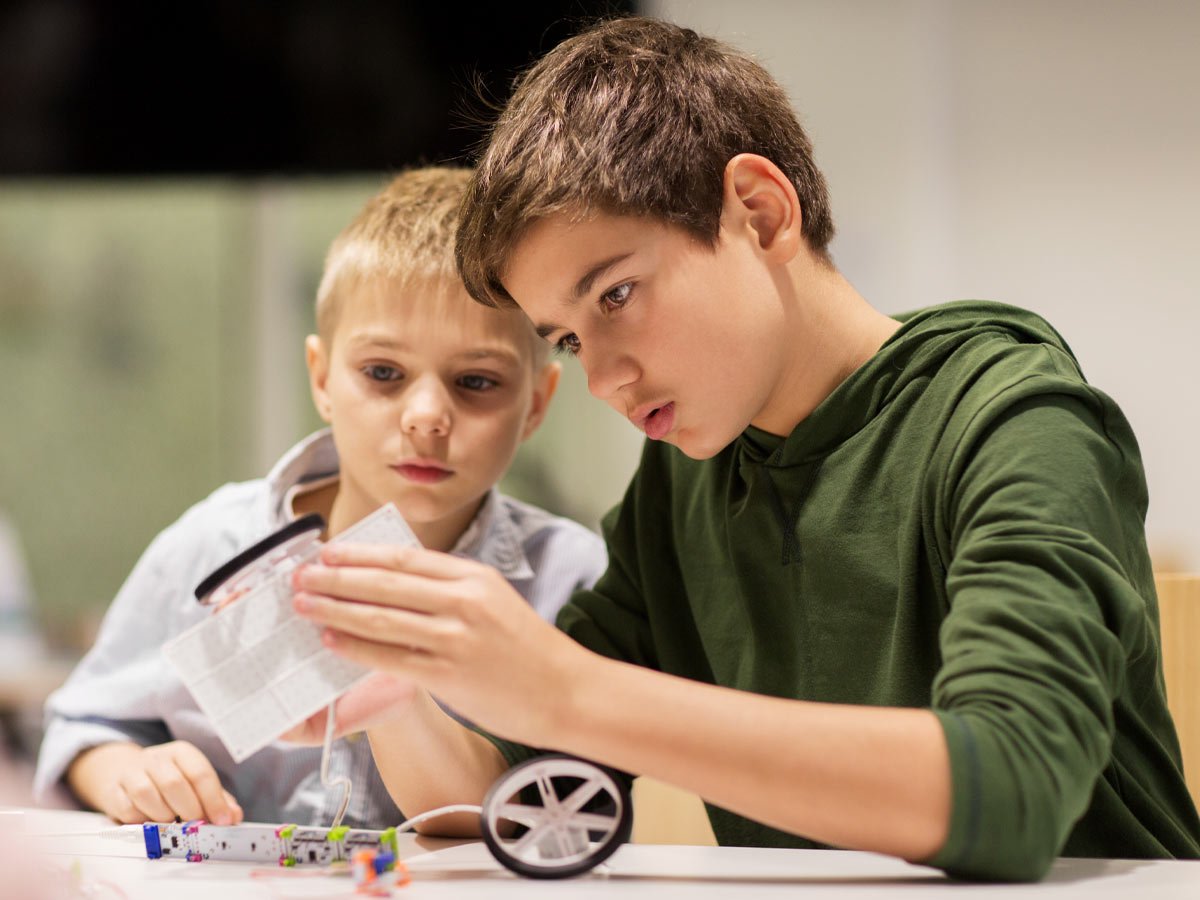
The balance changes by age and by classroom. Older students need more direct instruction and practice to meet growing academic demands. Even then, active learning remains valuable. Discussion, experiments, hands-on math tools, collaborative projects, and creative response activities help students connect knowledge to real understanding.
Relationships Make Learning Possible
Young children take academic risks when they feel safe, known, and respected. A warm teacher-child relationship is not an extra benefit beside the curriculum. It is part of how children learn.
In a nurturing classroom, teachers set clear, consistent boundaries while allowing children to express feelings and learn from conflict. If a child becomes frustrated by a difficult task, an adult can name the feeling, offer a strategy, and help the child try again. Over time, children begin to build the language and self-regulation needed to manage challenges more independently.
This is why small class sizes and experienced teachers matter so much in the early years. Teachers who know their students well can notice subtle changes: a usually talkative child who has become quiet, a student who is avoiding writing, or a child who is ready for a new level of challenge. Observation is not separate from instruction. It guides instruction every day.
Family partnership strengthens this work. Parents see aspects of their children that school staff may not see, while teachers can share specific evidence of classroom growth. Open communication helps adults respond with consistency, whether a child is working on separation at drop-off, making friends, practicing independence, or building confidence as a reader.
Signs a Curriculum Fits Your Child’s Stage
Parents do not need to be curriculum experts to evaluate whether a program respects children’s development. During a school visit or classroom conversation, look for a learning environment where children are engaged rather than simply occupied. The room may be active, but it should have clear routines, purposeful materials, and adults who are calmly involved.
A strong program will show evidence of both care and learning. Children’s work may look different from one another because they are developing different ideas and skills. Teachers should be able to explain what children are learning through an activity and how they adapt support when needed.
Consider asking how the school approaches these areas:
- Early literacy and math instruction, including how teachers respond when children are ready for more help or more challenge
- Social-emotional learning, conflict resolution, and classroom routines
- Play, art, movement, outdoor learning, and hands-on exploration
- Assessment and parent communication, including how progress is shared
- Transitions between Pre-K, Kindergarten, and the early elementary years
There is no single perfect curriculum for every child. Some children thrive with a bit more structure and predictability; others need additional opportunities for movement, imagination, or language-rich conversation. What matters is whether the school can explain its choices clearly and respond thoughtfully to the children in its care.
Academic Readiness Is More Than Early Skills
It is understandable to want children to be prepared for what comes next. Parents want reassurance that their child will enter Kindergarten ready to learn or move into elementary grades with a solid foundation. But readiness is broader than recognizing letters, counting to 100, or completing a worksheet independently.
A ready learner is also developing curiosity, attention, resilience, communication, and the ability to participate in a group. They can ask for help, keep trying after a mistake, listen to another person’s perspective, and feel that school is a place where they belong. These capacities support academic success long after the early years.
At The Winchester School, this balanced view helps children build foundational skills while growing into confident, joyful learners. Academic rigor and nurturing care do not compete when instruction is designed around the whole child. They reinforce one another.
When you visit an early learning classroom, watch for the small but meaningful signs: a teacher kneeling to listen, a child explaining an idea, materials that invite curiosity, and classmates learning how to work together. Those everyday moments can tell you a great deal about whether children are being prepared not only for the next grade, but for a lifelong relationship with learning.