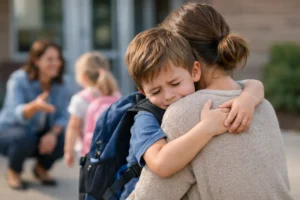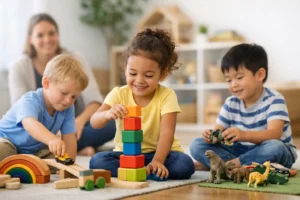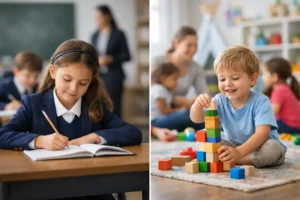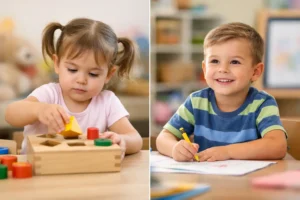

A child crouched beside a block tower may look like they are simply building. Yet they may be testing balance, counting pieces, negotiating with a classmate, recovering from a collapse, and trying again. Those moments help explain why play based learning benefits reach far beyond keeping young children busy or entertained. Purposeful play gives children a meaningful way to practice the academic, social, and emotional skills that support a strong beginning in school.
For children ages 3 through 8, learning is most lasting when it is active, hands-on, and connected to something that feels real. A thoughtfully prepared classroom does not ask children to choose between joyful exploration and meaningful academic growth. It brings the two together.
What Play-Based Learning Looks Like in a Classroom
Play-based learning is not a free-for-all, and it is not a break from learning. It is an approach in which teachers create intentional opportunities for children to explore ideas, use materials, ask questions, and apply new skills through play. The teacher observes closely, asks well-timed questions, introduces vocabulary, and adjusts support for each child.
A dramatic-play restaurant, for example, can become a setting for writing menus, recognizing numbers, counting pretend money, taking turns, and using polite language. At a water table, children can compare full and empty, predict whether an object will float, and describe what they notice. During a story reenactment, they build comprehension, expressive language, and confidence before they ever complete a worksheet.
This does not mean children never receive direct instruction. Young learners also benefit from clear routines, phonics practice, read-alouds, modeling, and guided small-group work. The strongest early childhood programs balance these experiences. Play gives children a place to use and deepen what they are learning, while intentional teaching helps them gain the foundational skills to do so.
7 Play Based Learning Benefits That Matter
1. Children build stronger language skills
Play creates a reason to communicate. Children explain their ideas, ask for a turn, describe what they are making, and respond to friends. This natural back-and-forth builds vocabulary, listening skills, and the ability to express thoughts clearly.
Teachers can extend the learning by introducing precise words during play. A child who says a bridge is “falling down” may learn words such as support, balance, stable, or redesign. In a warm classroom community, even quieter children have repeated, low-pressure chances to find their voice.
2. Early literacy becomes meaningful
Young children are more eager to engage with letters and print when they see a purpose for them. A child may write a sign for a block structure, label a drawing, make a grocery list, or search for the first letter in a friend’s name. These experiences reinforce that print carries meaning.
Play does not replace structured literacy instruction. Rather, it helps children connect letter knowledge, sounds, storytelling, and writing to everyday experiences. When children act out a favorite book or retell it with puppets, they practice sequencing, comprehension, and the language patterns that later support reading and writing.
3. Math and problem-solving feel useful
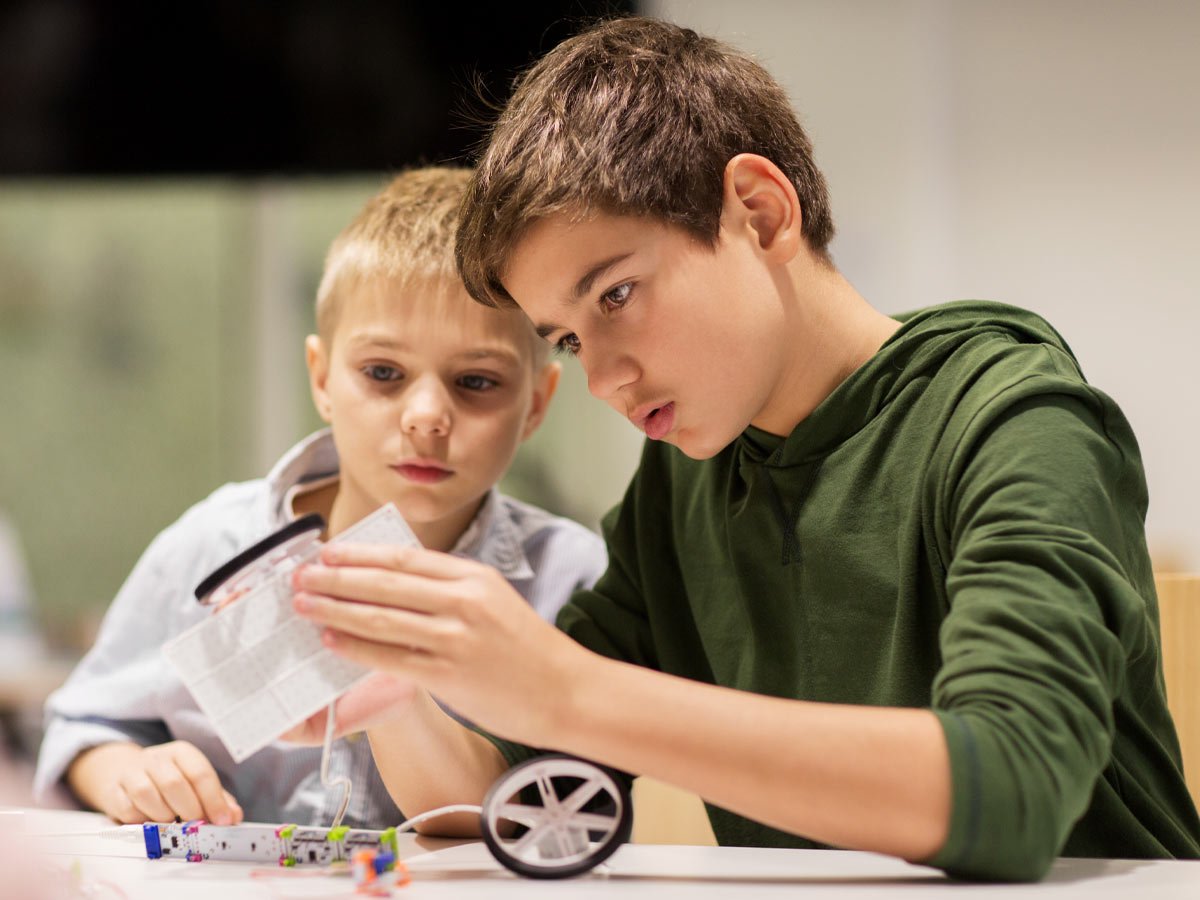
Children encounter math naturally while playing: sorting buttons by color, measuring ingredients in a pretend bakery, comparing the height of towers, or deciding how many plates a table needs. They begin to notice patterns, quantities, shapes, and relationships because those concepts help them accomplish a goal.
Problem-solving grows alongside those early math skills. A ramp that is too steep, a puzzle piece that will not fit, or a game rule that feels unfair presents a manageable challenge. With patient guidance, children learn to observe, test an idea, revise it, and persist. Those habits are just as valuable as getting an immediate right answer.
4. Social skills develop through real practice
Sharing is easier to teach when there is something meaningful to share. Play gives children daily opportunities to enter a group, negotiate roles, wait, compromise, lead, and repair small conflicts. These are complex skills for young children, and they develop over time.
A teacher’s role is especially important here. Rather than solving every disagreement for children, an experienced teacher can help them name feelings and find words: “You both want the red truck. What could we try?” Children gradually learn that their ideas matter and that classmates’ ideas matter, too.
5. Children learn to manage big feelings
Early childhood is full of big emotions: pride, frustration, excitement, disappointment, and uncertainty. Play offers a safe setting to experience and work through them. A child can practice being brave as a firefighter in dramatic play, regain composure after losing a game, or feel capable after completing a challenging construction project.
Because play is engaging, children are often willing to stay with a challenge longer than they would in a more formal task. Supportive adults help them recognize effort, use calming strategies, and try again. Over time, this builds resilience and a growing belief that difficult things can be worked through.
6. Curiosity leads to deeper learning
Children learn more deeply when they have a role in the question. A class fascinated by insects might observe them outdoors, draw what they see, read nonfiction books, compare habitats, and create a model garden. One shared interest can naturally include science, art, language, measurement, and collaboration.
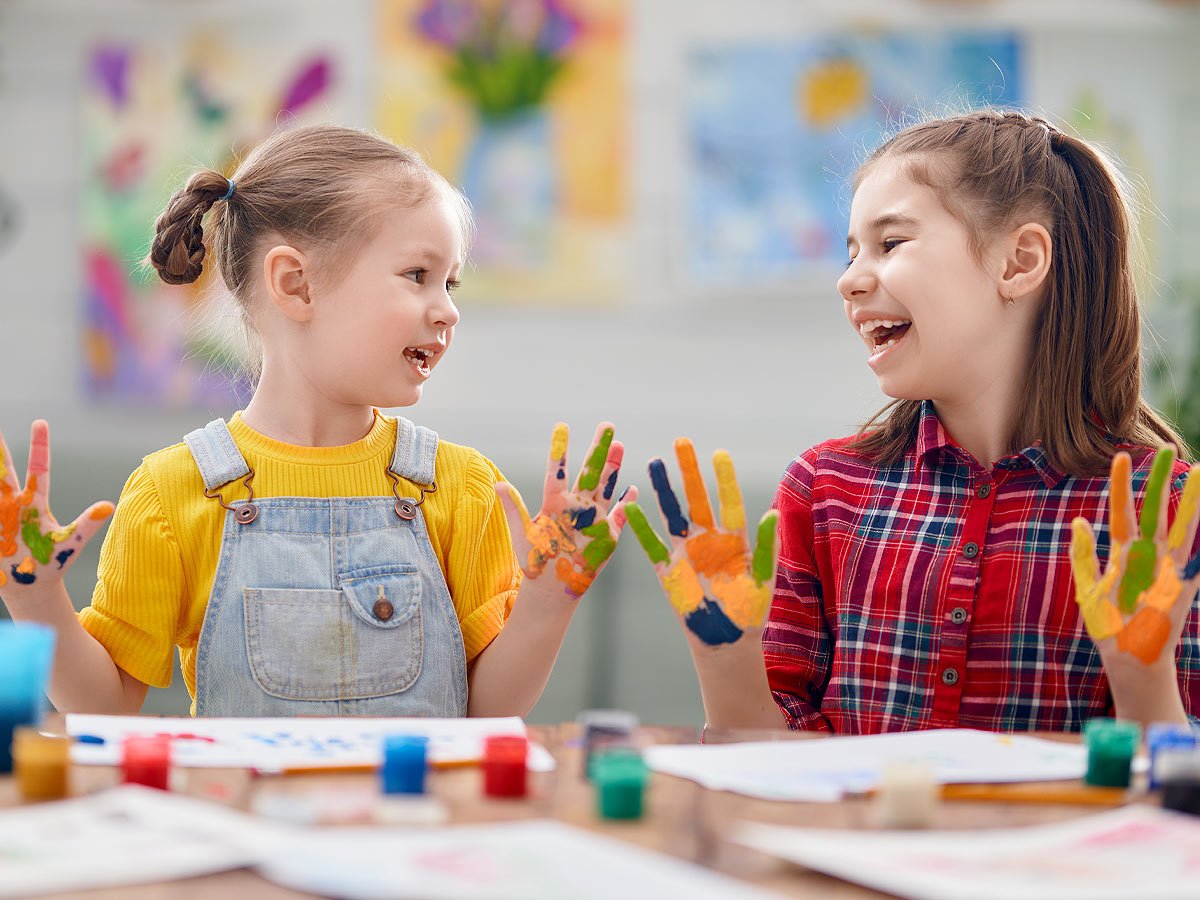
This kind of exploration also helps teachers understand how each child learns. One child may show knowledge through detailed drawings, another through conversation, and another by building a model. Individualized support becomes more possible when teachers can see children thinking in many different ways.
7. Confidence grows through independence
Play invites children to make choices and take ownership. They decide how to begin, choose materials, test their ideas, and see the results. Even small moments of independence, such as organizing supplies or inviting a friend into an activity, help children see themselves as capable members of a classroom.
Confidence does not come from praise alone. It grows when children have genuine opportunities to do something challenging with appropriate support. When a child realizes, “I figured it out,” that feeling can carry into reading, math, friendships, and new routines.
The Balance Parents Should Look For
The benefits of play are strongest when the environment is thoughtfully structured. A quality program has clear expectations, predictable routines, engaging materials, and teachers who know when to step in and when to give children space. The goal is not constant adult direction, but neither is it leaving children without guidance.
Parents may reasonably ask how play connects to academic readiness. Look for teachers who can explain the learning within an activity. They should be able to describe how a building project supports spatial reasoning, how a game reinforces number sense, or how a story center encourages literacy and collaboration. Learning through play should be visible in children’s growth, even when it does not always look like traditional desk work.
It also depends on a child’s developmental stage. Preschool children need abundant time for hands-on exploration, movement, imaginative play, and conversation. As children enter kindergarten and early elementary grades, play can continue to support learning while more sustained reading, writing, and math instruction is added. The balance changes, but active learning remains valuable.
Bringing Playful Learning Home
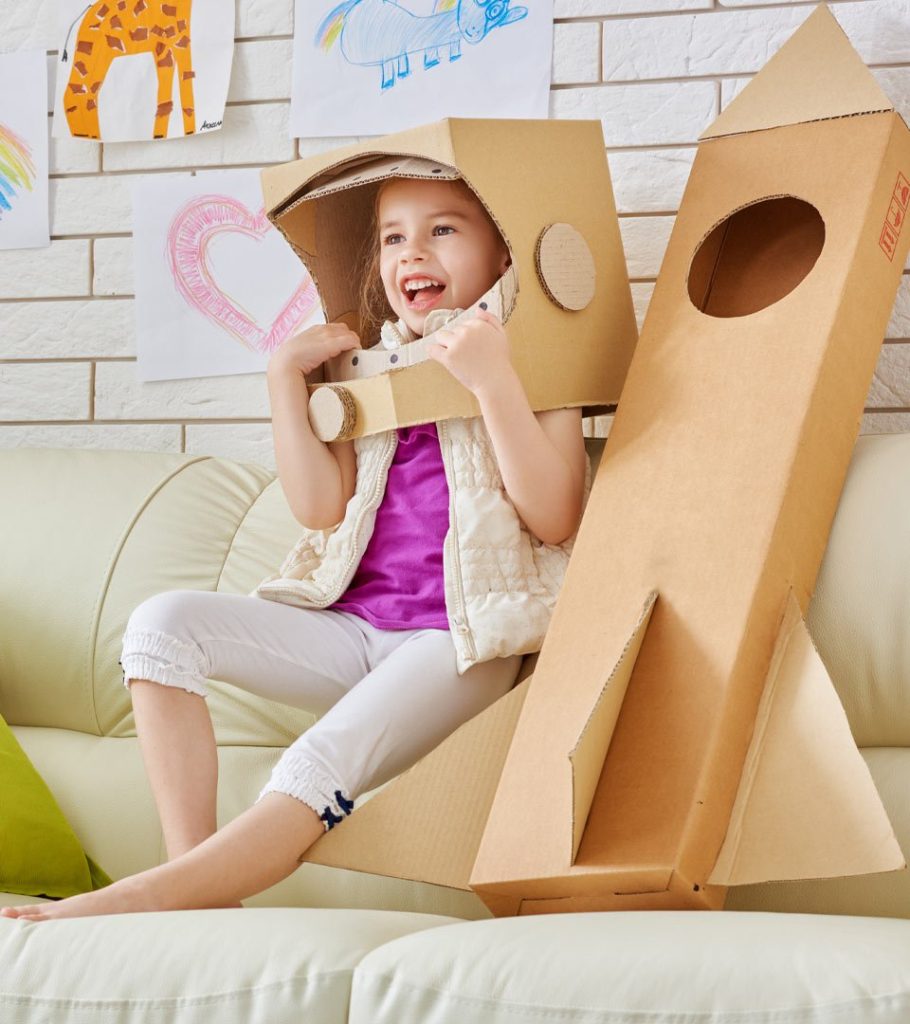
Families do not need special materials to support learning through play. A walk around the neighborhood can become a color hunt or a conversation about changing seasons. Preparing dinner can involve counting, measuring, and following steps. A cardboard box can become a house, spaceship, or pet clinic when children are given time and a few open-ended questions.
The most helpful questions are often simple: “What do you notice?” “What do you think will happen?” “How could we solve that?” Try to allow a pause before offering the answer. That pause gives children room to think, experiment, and trust their own ideas.
At The Winchester School, we believe a child’s early school years should feel both secure and full of possibility. When children are known well, encouraged thoughtfully, and given room to explore, play becomes more than a pleasant part of the day. It becomes a foundation for joyful learning, caring relationships, and the confidence to keep growing. As you consider an early learning environment, look for one where your child can be curious, supported, and proudly themselves.